I. About This Reviewer Edition
Thank you for playing Age of Pericles before almost anyone else. This copy goes out with prototype boxes so reviewers can learn the game from the book, the way buyers will.
Prototype rules v1.1, 29 October 2026. The components in your box are prototypes. The art is close to final, but materials, finishes and the Deluxe upgrades will differ from what you hold.
The rules may still change after playtesting. When they do, the online rules reader is updated and the dated PDF of every edition stays available beside it.
 play.apeiron.games/age-of-pericles/rules
Latest rules, past editions and the change list
1. Still in testing
- The Demagogue (2 players). Its rules are in Appendix 4 (p. 21). Please tell us how it plays.
- Solo. Solo mode is in development. This edition has no solo rules; they will appear on the rules reader first.
2. Changed since the August 2026 text
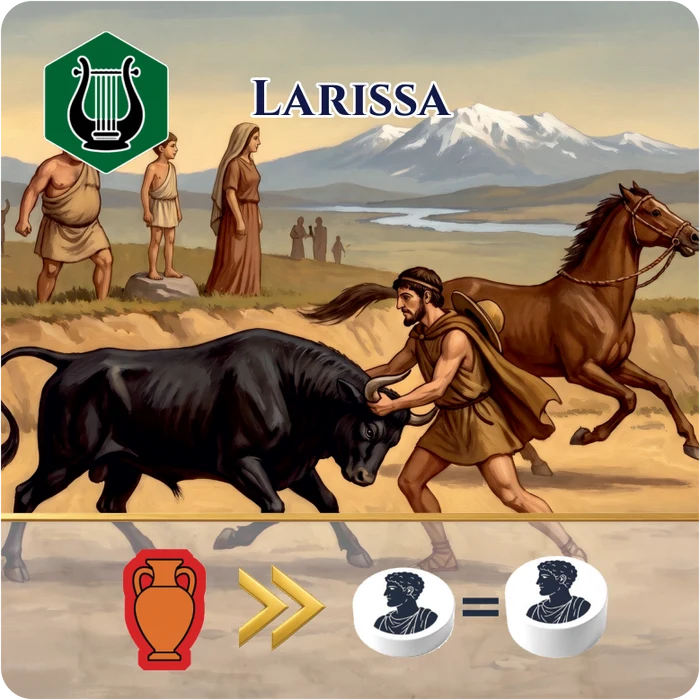
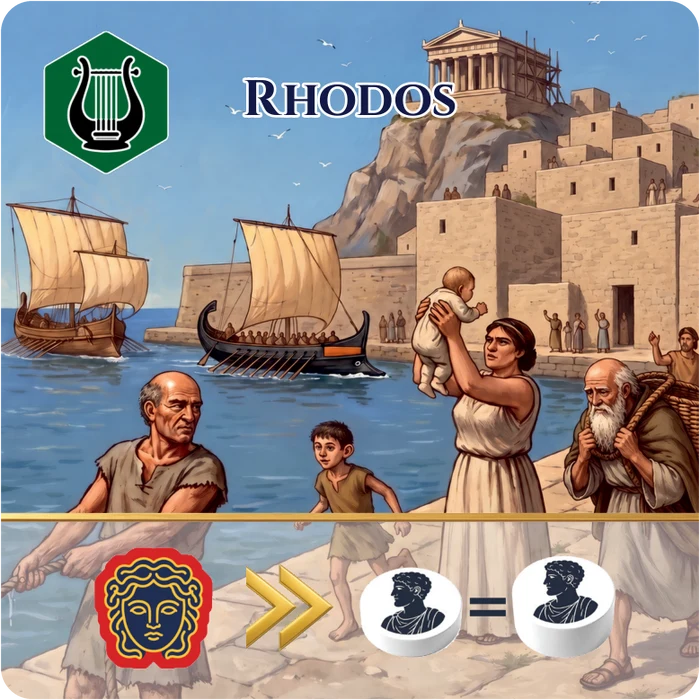
- Upgrade a Citizen (Larissa, Rhodos, Ephesos) and the Mission condition Large → Small no longer swap pieces. The Citizen only acts as the other size for its Main Actions; it keeps its own count in Governance (p. 24).
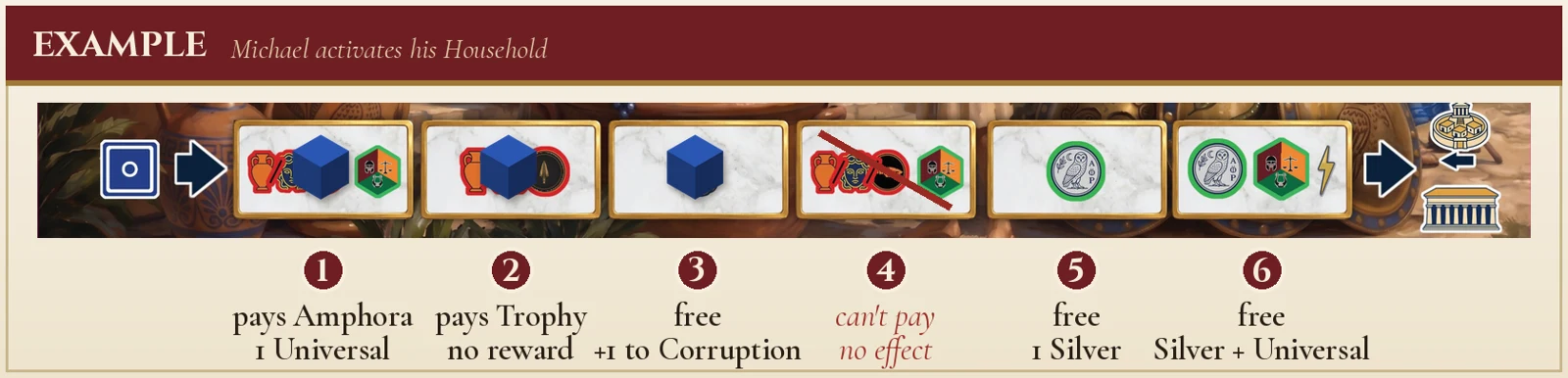
- Activate your House resolves every space from the first, including spaces your own pieces occupy. Pay each cost; a space you cannot pay for does not resolve (p. 13).
- Athens builds leave the Diplomats on the Progress track: nothing scores and they stay (p. 12).
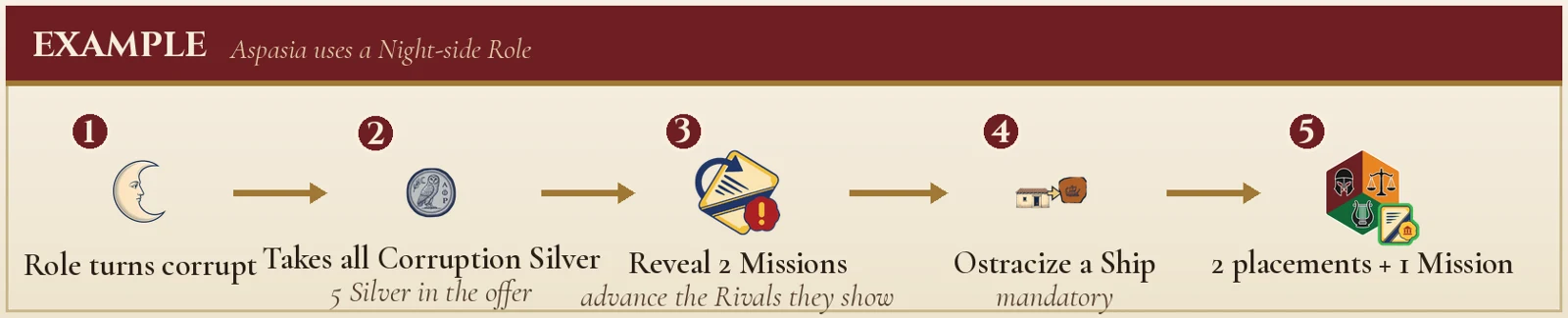
- Night side. Ostracizing a Unit is mandatory; no card or effect lets you decline it (p. 13).
- Knocked-out Diplomats earn the Compensation table reward, not the Glory printed on a card (p. 10).
- Corruption is an offer of Silver on the board; there is no bag (p. 9).
- Demagogue card 8 ostracizes one Unit from every real player (p. 21).
- Components: the Ostracized Camp is now a separate tile, the Large Citizen is a wider 19 mm disc, Silver comes in values of 4 and 1, and the starting Skills match the current deck (pp. 4–5, 19).
3. Your first game
- Read pages 4–17 in order, then play. The appendices are for looking things up during the game.
- Play with 3 or 4 players; a game takes 90–120 minutes. For a gentler first game you may leave the Skill cards in the box (Setup step 10).
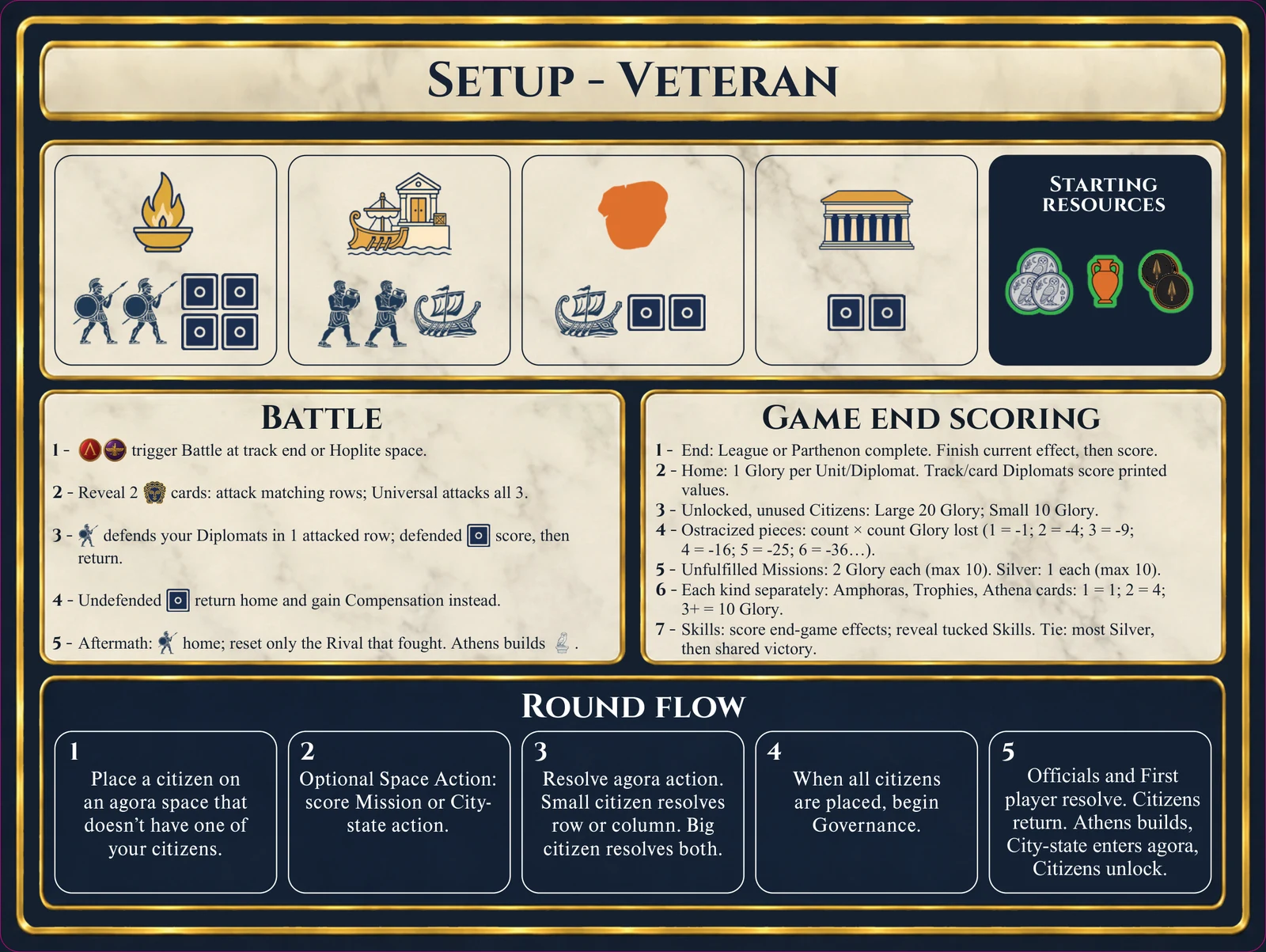
- Keep the Setup card’s back in front of you: it is your player aid.
Anything unclear, any rule you had to guess, any moment the table went quiet: write to info@apeiron.games. Page numbers help us most.
II. Introduction

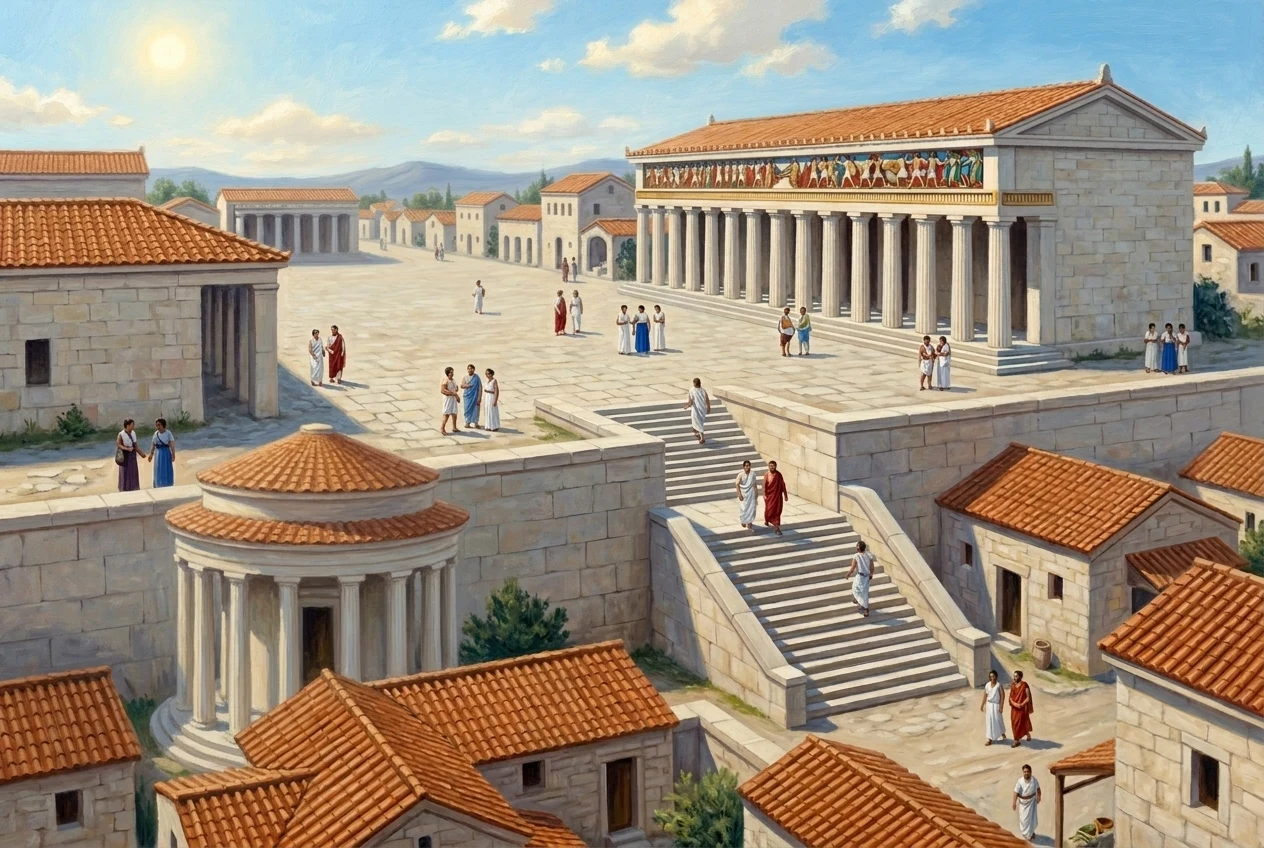
Age of Pericles is a historical strategy game for 3–5 players (2 with the Demagogue, in testing; solo in development) set in 447–432 BCE, the years when the Parthenon rose on the Athenian Acropolis. You lead an ambitious Athenian house through the Golden Age of Hellas: place Citizens in the Agora, send Workers, Ships and Hoplites across the Aegean, draw City-states into the Delian League, and raise the Parthenon column by column — turning every deed into Glory. In 454 BCE, under Pericles’ leadership, Athens moved the League’s treasury from Delos to the Acropolis; tribute once gathered for common defence now helped fund the city’s democracy, fleet, and monuments. Hold off Sparta and Persia, time your builds, and the player with the most Glory when the temple is crowned leads Athens into her Golden Age.
Under the hood the game blends action selection (place your Citizens on the Agora grid), resource management (Amphoras, Silver and Trophies fuel everything you do), area majority in the city’s offices, set collection of Athena cards, and a sliding engine on the Progress track that pays out every time one of its rows is scored.
On the parchments. Aged panels like this one appear throughout the book. They carry historical background and designer notes — colour for the curious, never rules you need to play.
1. Foreword
When Tamás told me he wanted to build a game about Athenian democracy, I braced myself. I have spent my life with these texts, and watched the classical world flattened too often into columns and laurel wreaths — a backdrop, a costume. So I came to Age of Pericles as a sceptic and stayed as a collaborator. We checked every illustration against the sources — the fold of a himation, the bronze of a hoplite’s shield, the sound of each name. Nothing was waved through because it merely looked Greek.
What won me over was watching the history shape the play. The Parthenon rises at the centre of the board, where a city’s pride, its religion, and its raw ambition all met in the same stone. You compete for the very monument the Athenians competed to raise, for much the same reasons. If you leave the table knowing something true about Athens, we have done our work.
— Attila Gonda, classical-philologist, cultural consultant for Age of Pericles
III. Component Breakdown

Everything in the Classic box. Each piece is taught where you first use it; the board and its regions are on p. 8.
1. Boards & tiles
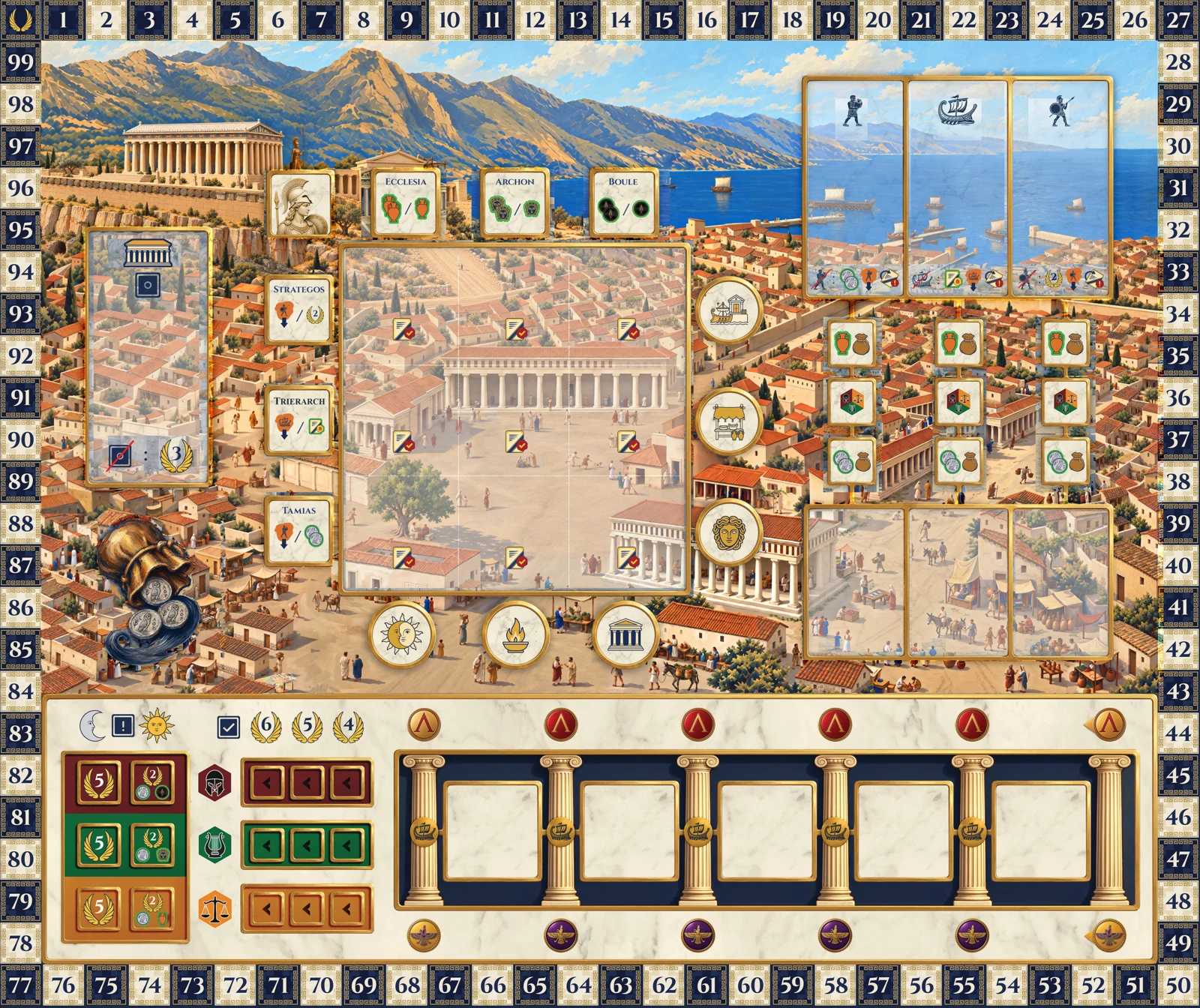 Athens board1
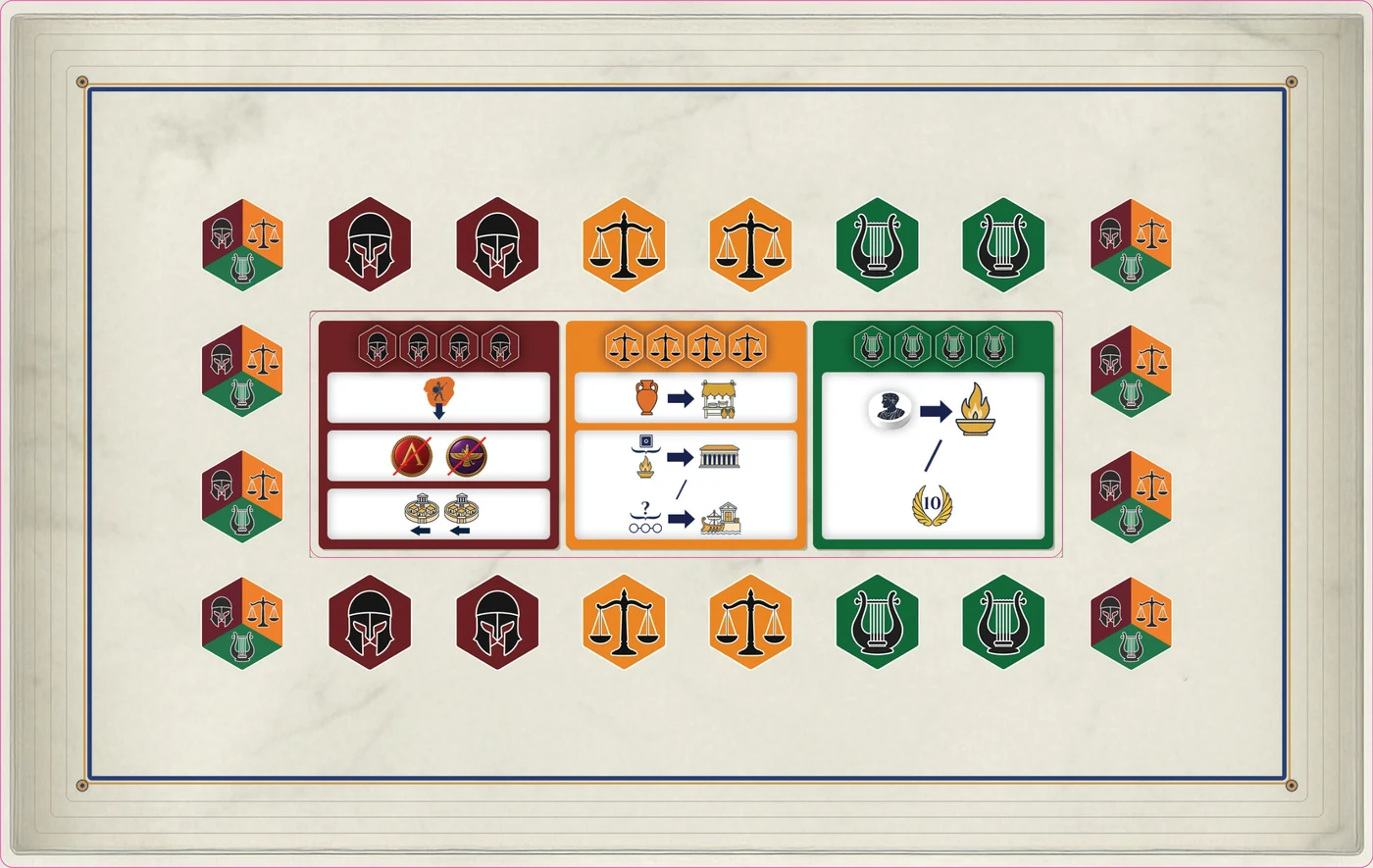 Parthenon board1
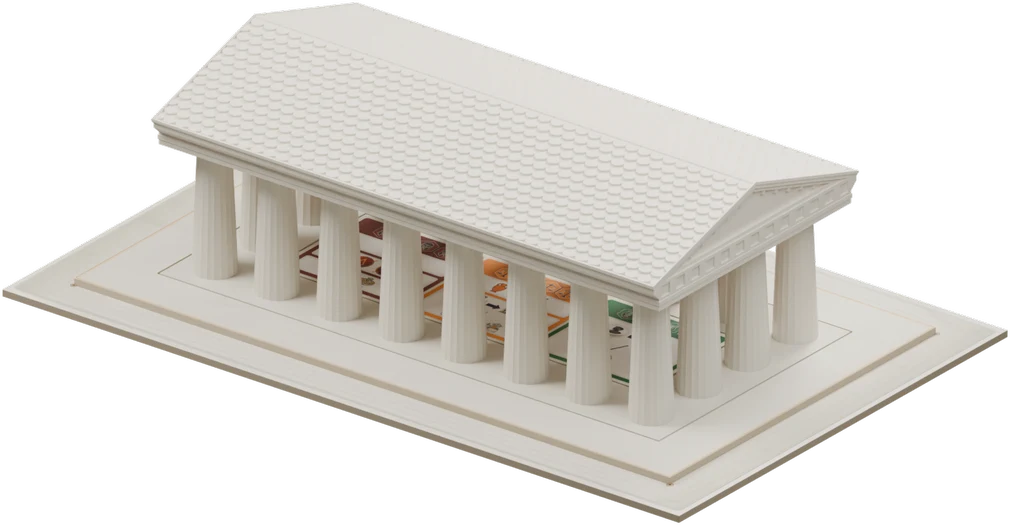 Parthenon columns & roofs20 + 2
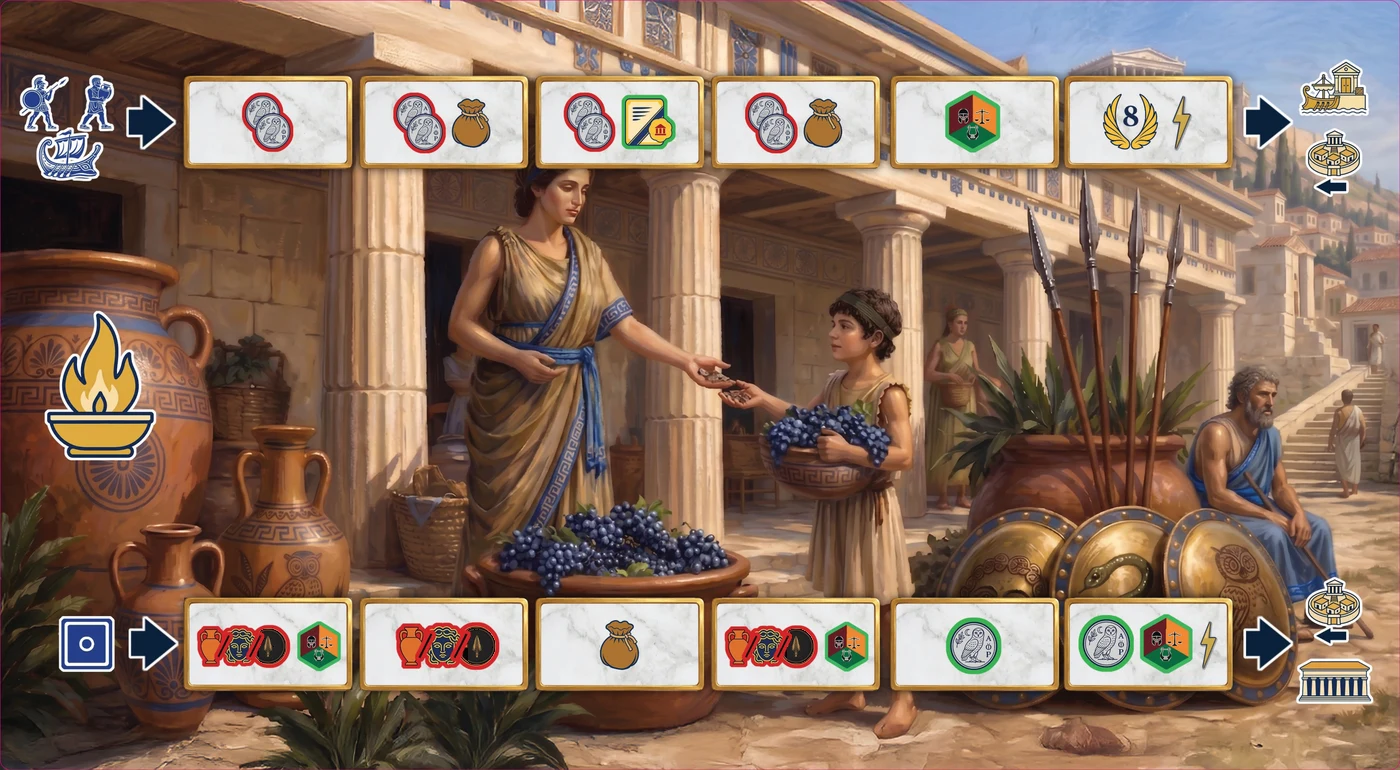 Oikos boards5, one per colour
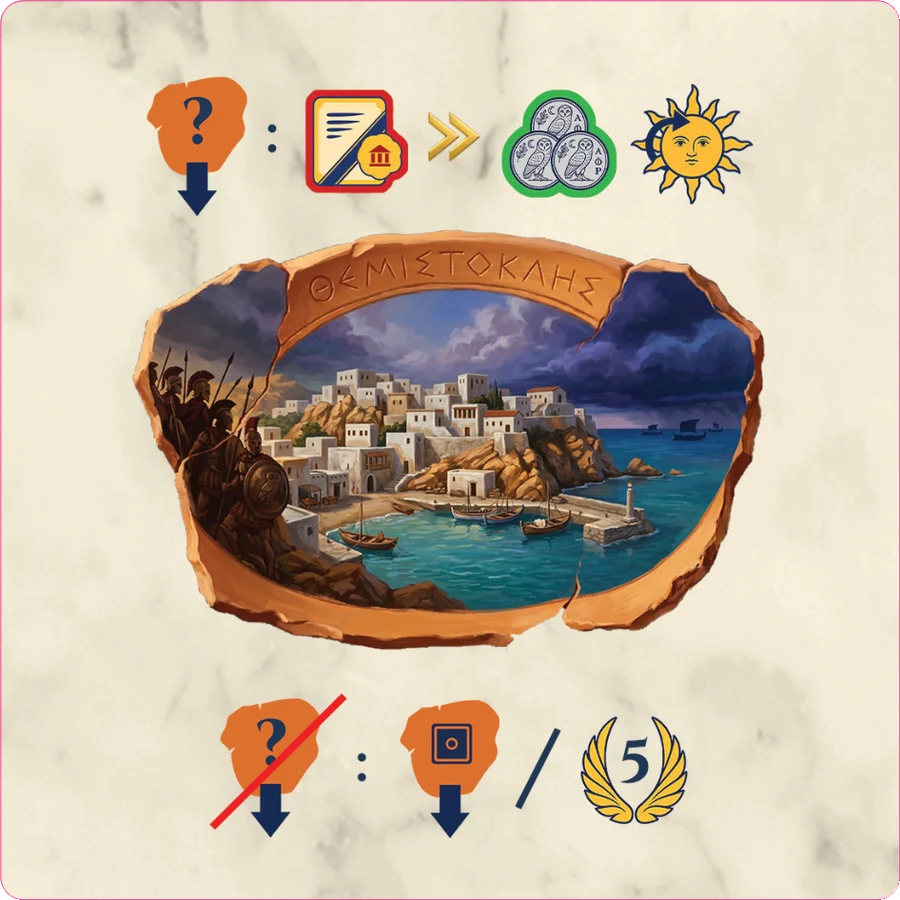 Ostracized Camp tile1, beside the board
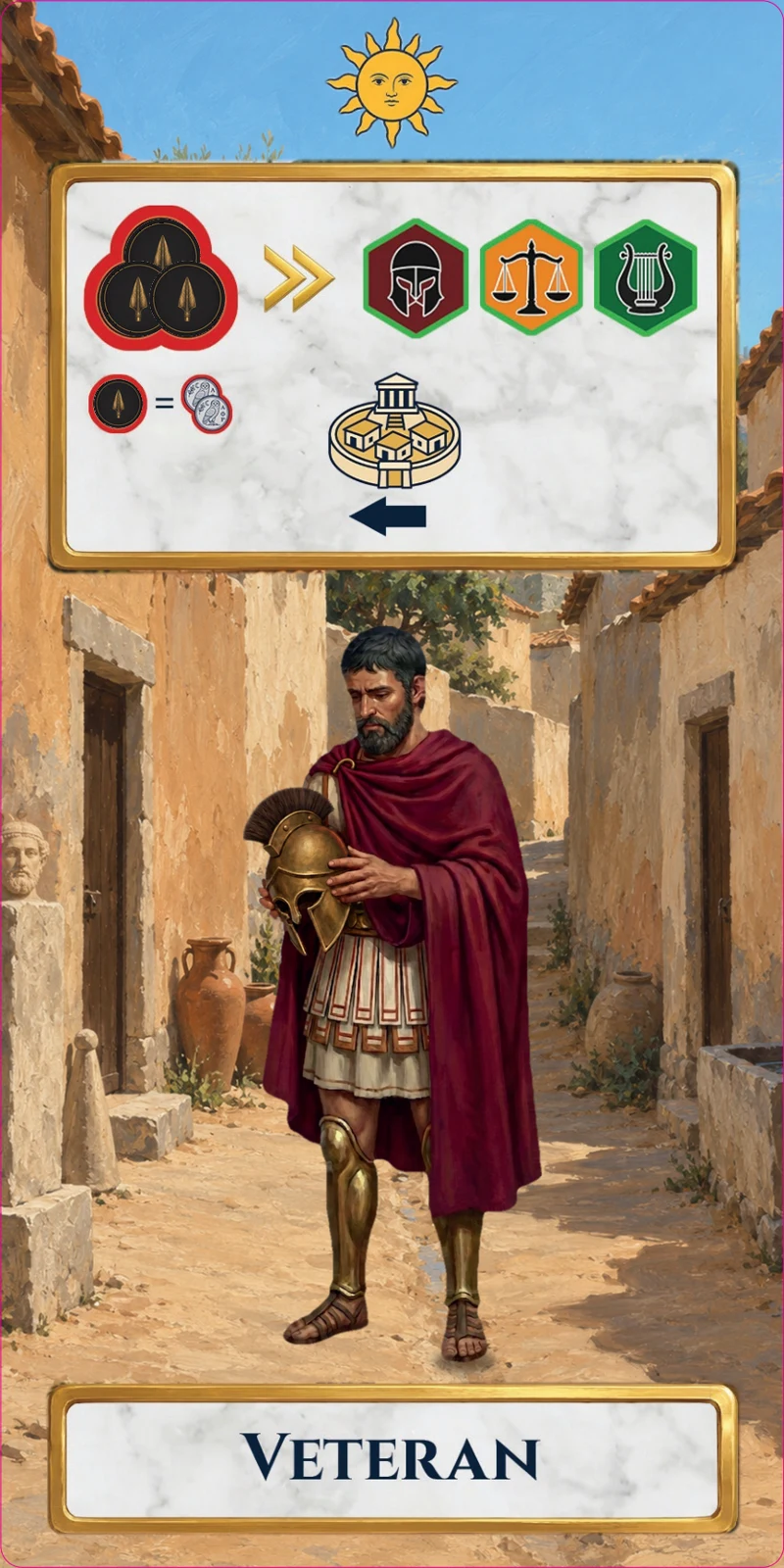
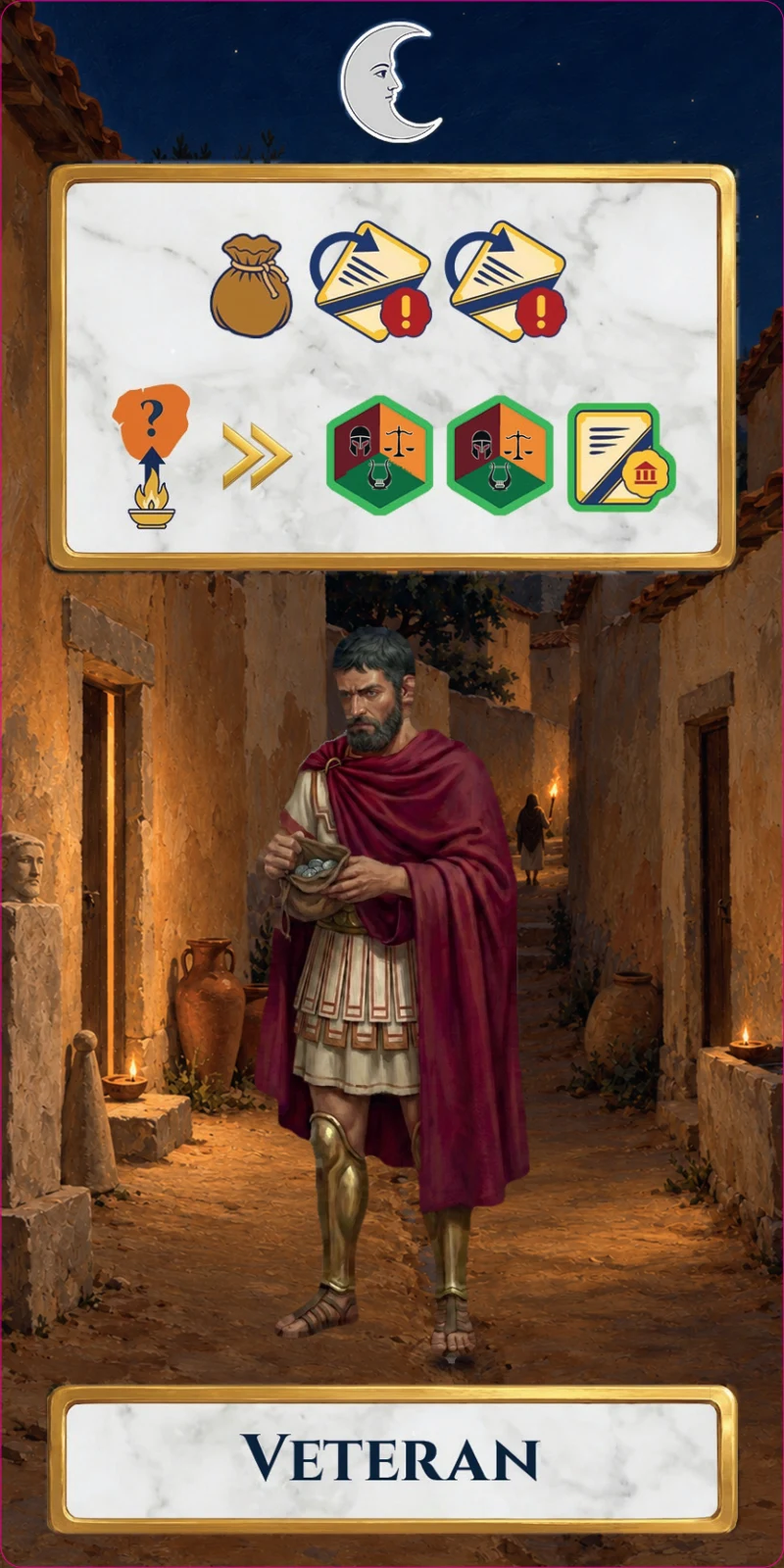 Role tiles · Day / Night6
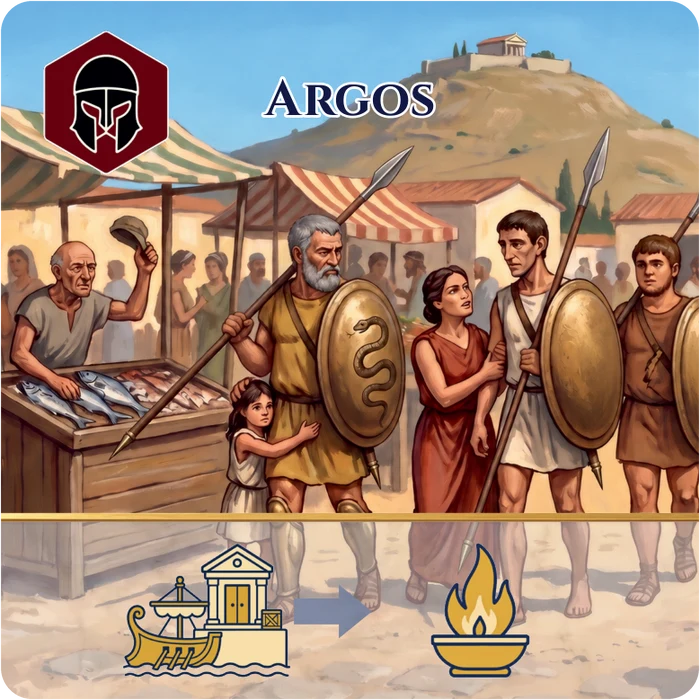
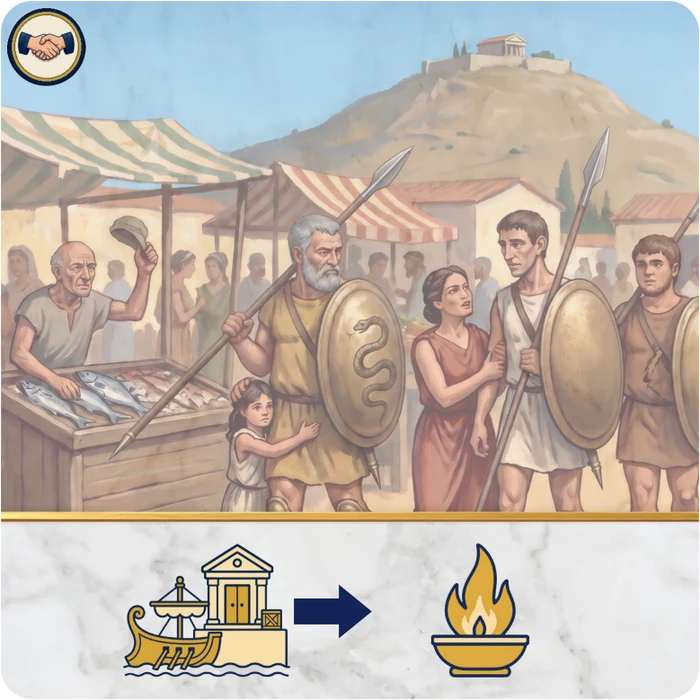
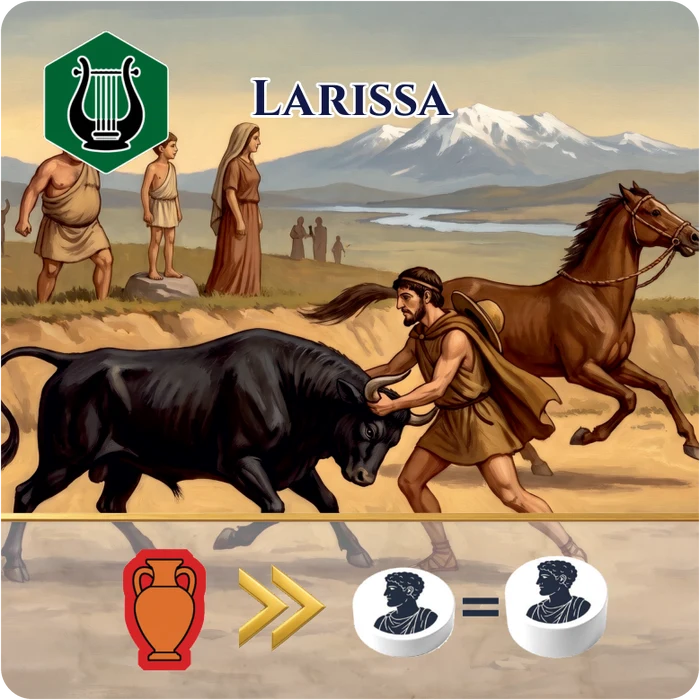
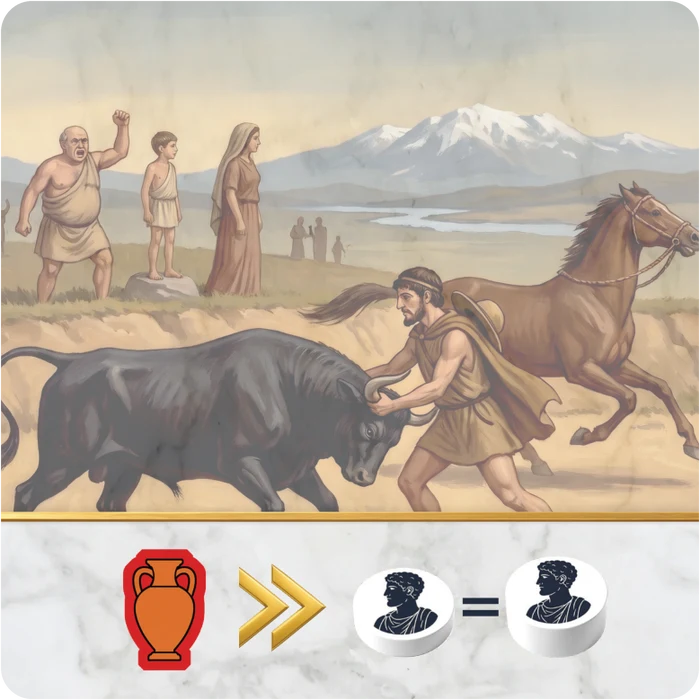
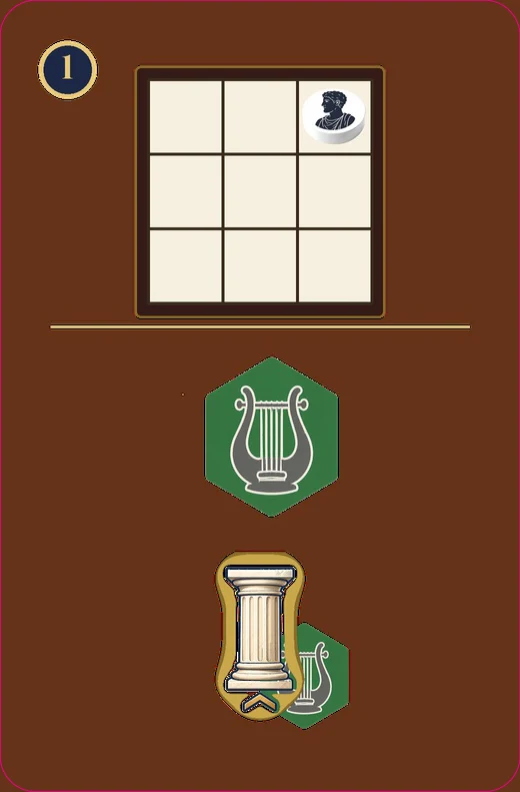
Tell the two setup stacks apart by the round handshake badge in the top-left corner of every starting tile’s back (circled); advanced backs have none.
2. Cards · face and back
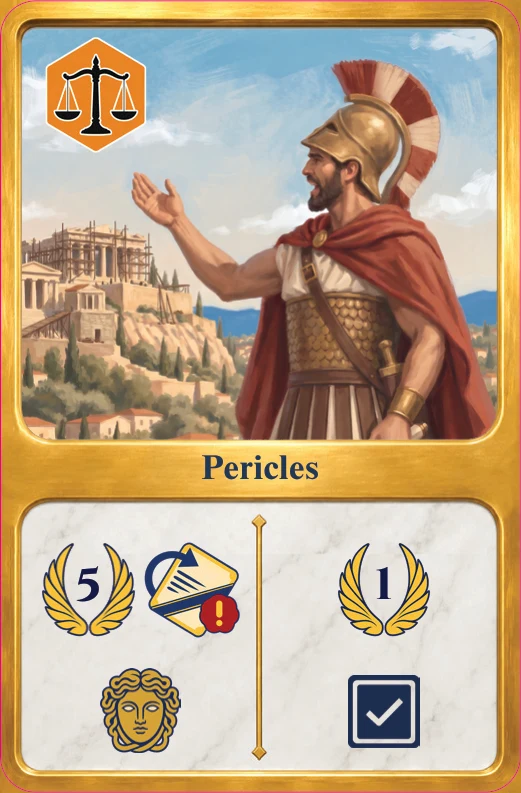
IV. Tokens and Wooden Pieces
Every piece on this page is shown close to its actual size.
1. Tokens & markers
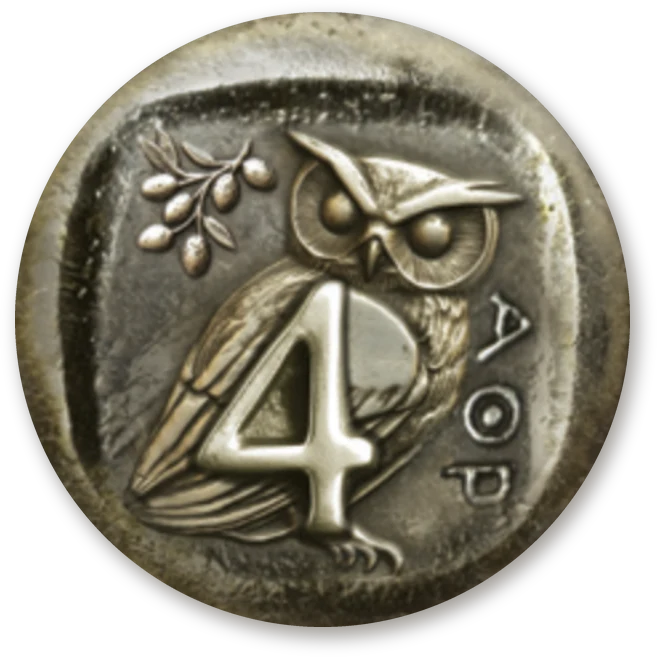 Silver · 48 (20 mm)
 Silver · 122 (15 mm)
 Amphora20 (25 mm)
 Trophy25 black wooden discs
 First Player1 token
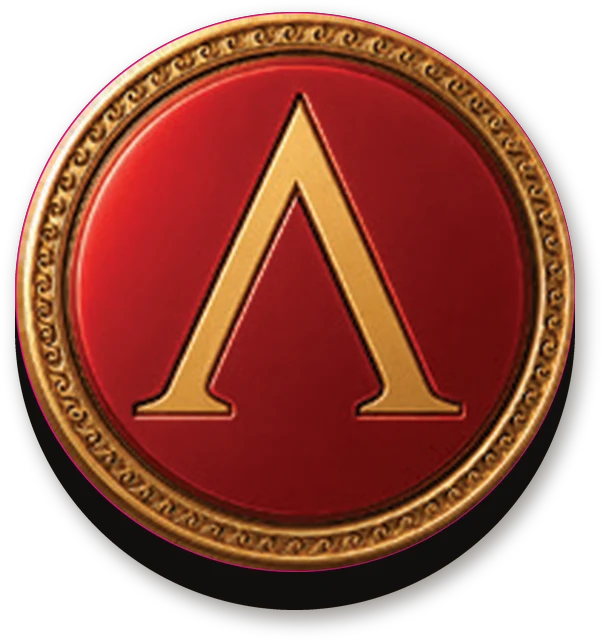
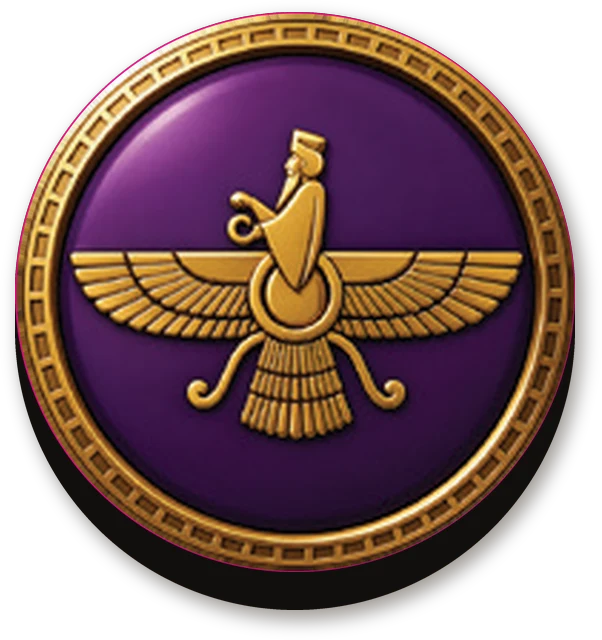 RivalsSparta & Persia, 35 mm discs
2. Player pieces — one set per player
 Large Citizen1 (19 mm)
 Small Citizens3 (15 mm)
 Glory marker1
 Diplomat cubes8
 Workers2
 Ships2
 Hoplites2
 Blue
 Burnt Amber
 Red
 Ivory
 Light Green
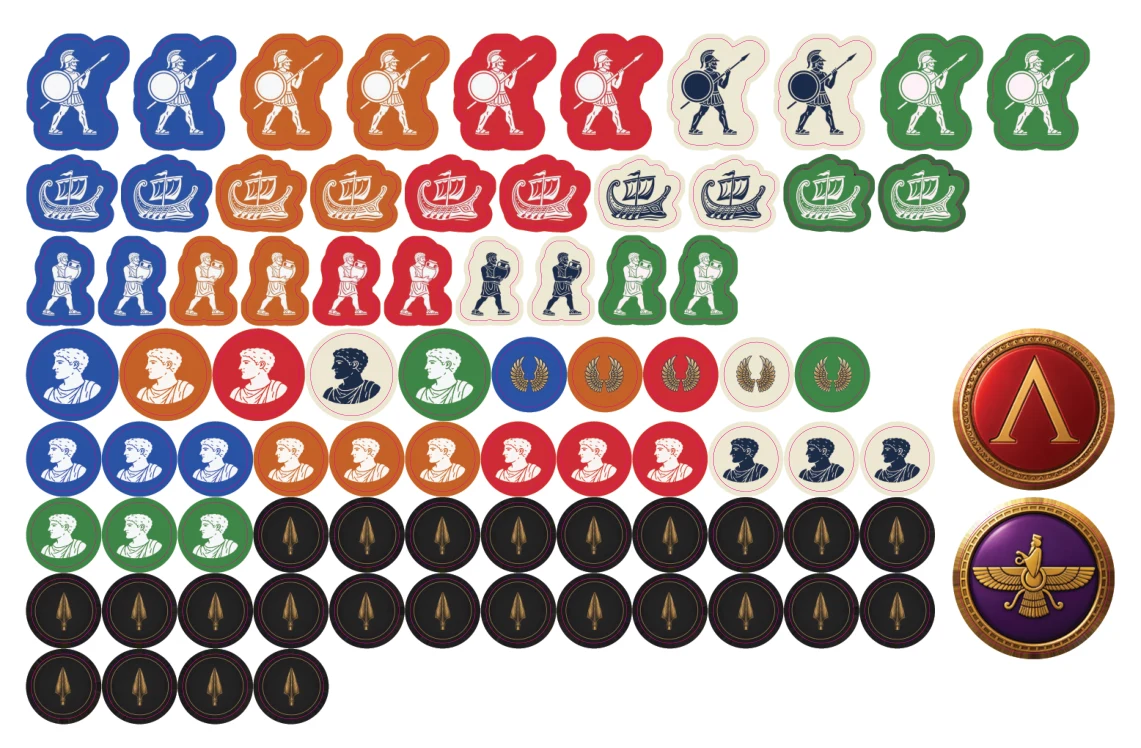
The sheet holds 164 stickers. Every wooden piece except the Diplomat cubes takes one sticker on each face: Citizens, Glory markers, Workers, Ships, Hoplites, Trophies and both Rivals. Match each sticker to the piece of the same shape and colour. The Glory marker’s second sticker shows 100+.
Deluxe edition: the same game, upgraded with metal Silver coins, sculpted 3D Amphoras and an Athena statue as the First Player marker.
Player counts: 3–5 players use the core rules. Two players add the Demagogue (in testing, p. 21). Solo mode is in development and not part of this edition.
V. Setup

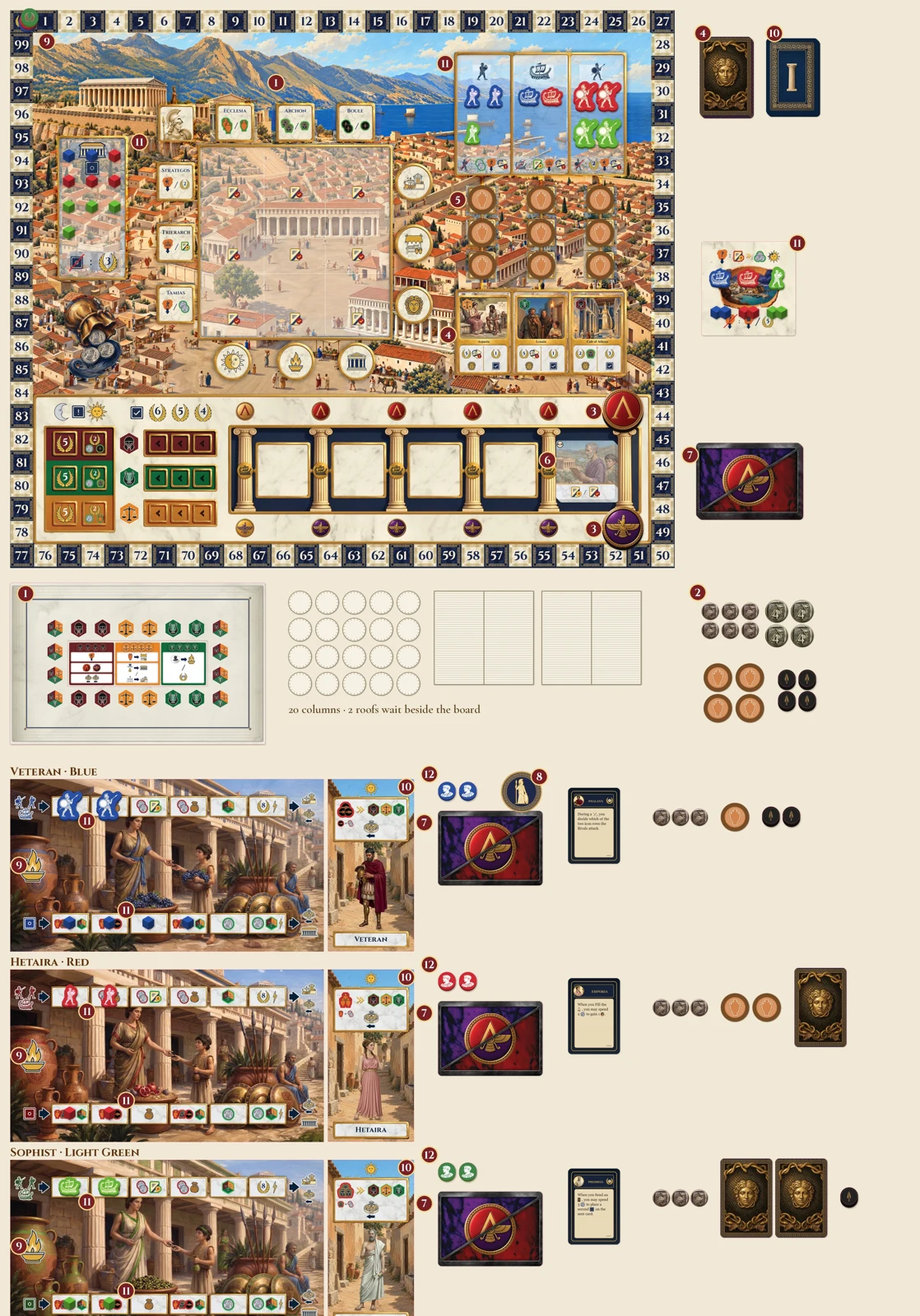
Set up in this order. The red numbers in the 3-player start on the next page match these steps.
1. The shared board (steps 1–8)
- Place the Athens board centrally and the Ostracized Camp tile beside it. Place the Parthenon board nearby, with all columns and roof pieces next to it. The Progress track, the Battle tracks (apart from Rival markers), and the Corruption offer start empty.
- Place all Silver, Amphoras and Trophies beside the board — the Reserve.
- Battle tracks: place the Spartan Rival on the start of its track (above the Diplomacy track) and the Persian Rival on the start of its (below). Battles are measured from these lines.
- Shuffle the Athena cards face-down; reveal 3 to the offer.
- Fully load the Market: 1 Amphora on every Emporion space.
- Shuffle the 6 starting and 9 advanced City-state tiles separately; return 3 of each to the box unseen. Stack the rest — 3 starting on 6 advanced — on the rightmost Diplomacy-track space, Diplomacy side up.
- Shuffle the Mission cards face-down and place the deck beside the Diplomacy track; deal 2 to each player — keep 1 and return the other to the bottom of the deck.
- The most convincing orator takes the First Player token.
2. Each player (steps 9–12)
- Take an Oikos board and all pieces of one of the 5 colours; put your Glory marker on “0” of the Glory track.
- From the last player counter-clockwise, draft a Role tile (Day side up), take its Setup card, choose 1 of that Role’s 2 starting Skill cards (shown by that Role’s avatar in the top-left), gain the Setup bonus, return the unchosen Skill to the deck, then shuffle the Skill deck beside Athens. First learning game: you may leave Skill cards in the box.
- Place your 8 Diplomats and your 2 Workers, 2 Ships and 2 Hoplites exactly as your Setup card shows: on your Oikos board, in Piraeus, in the Stoa and on the Ostracized Camp tile.
- Take 2 Small Citizens; your Large + third Small unlock at the ends of Rounds 1 & 2.
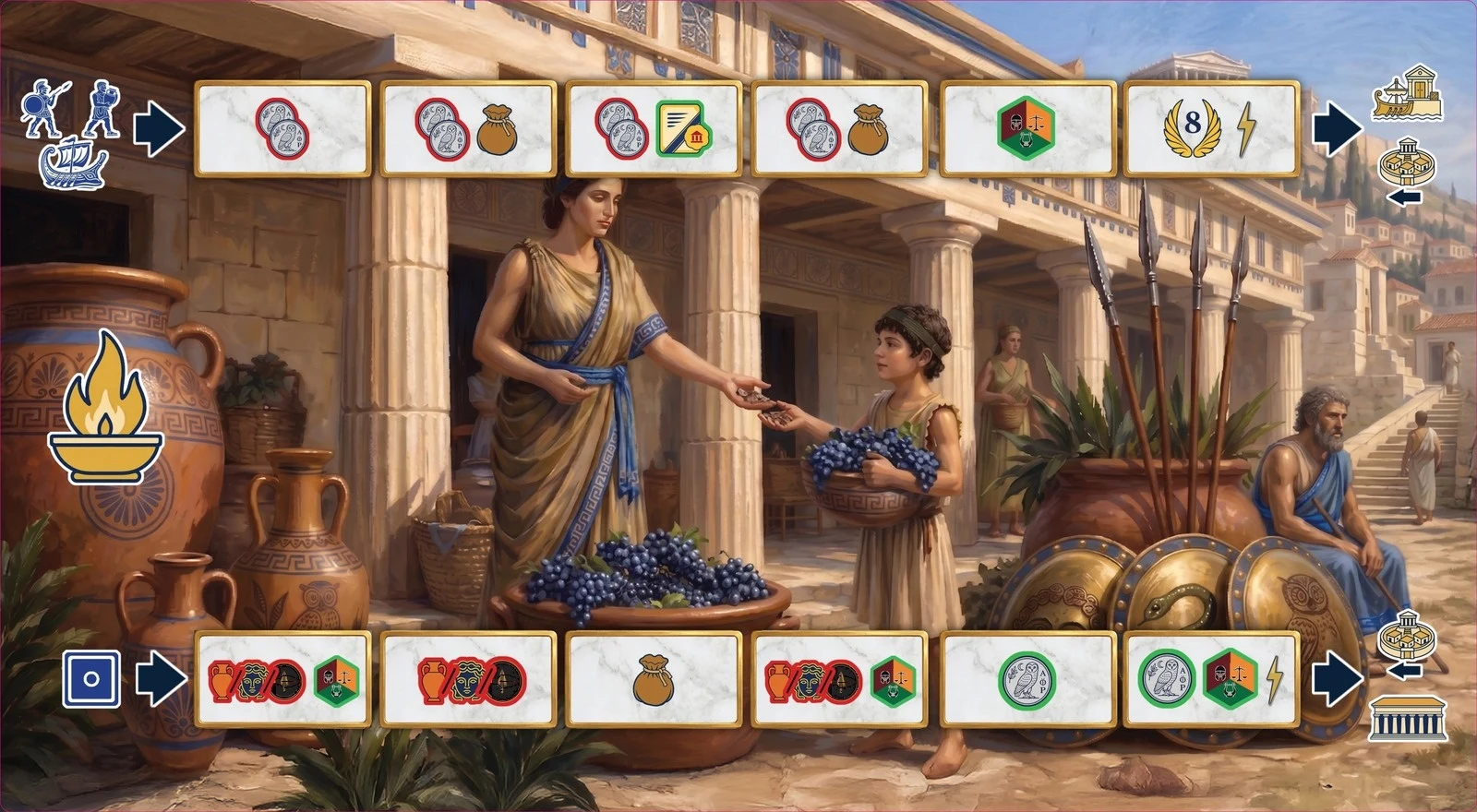
On every space a red frame is a cost, a green frame a gain (p. 13).
VI. The 3-Player Start
VII. The Board, Region by Region
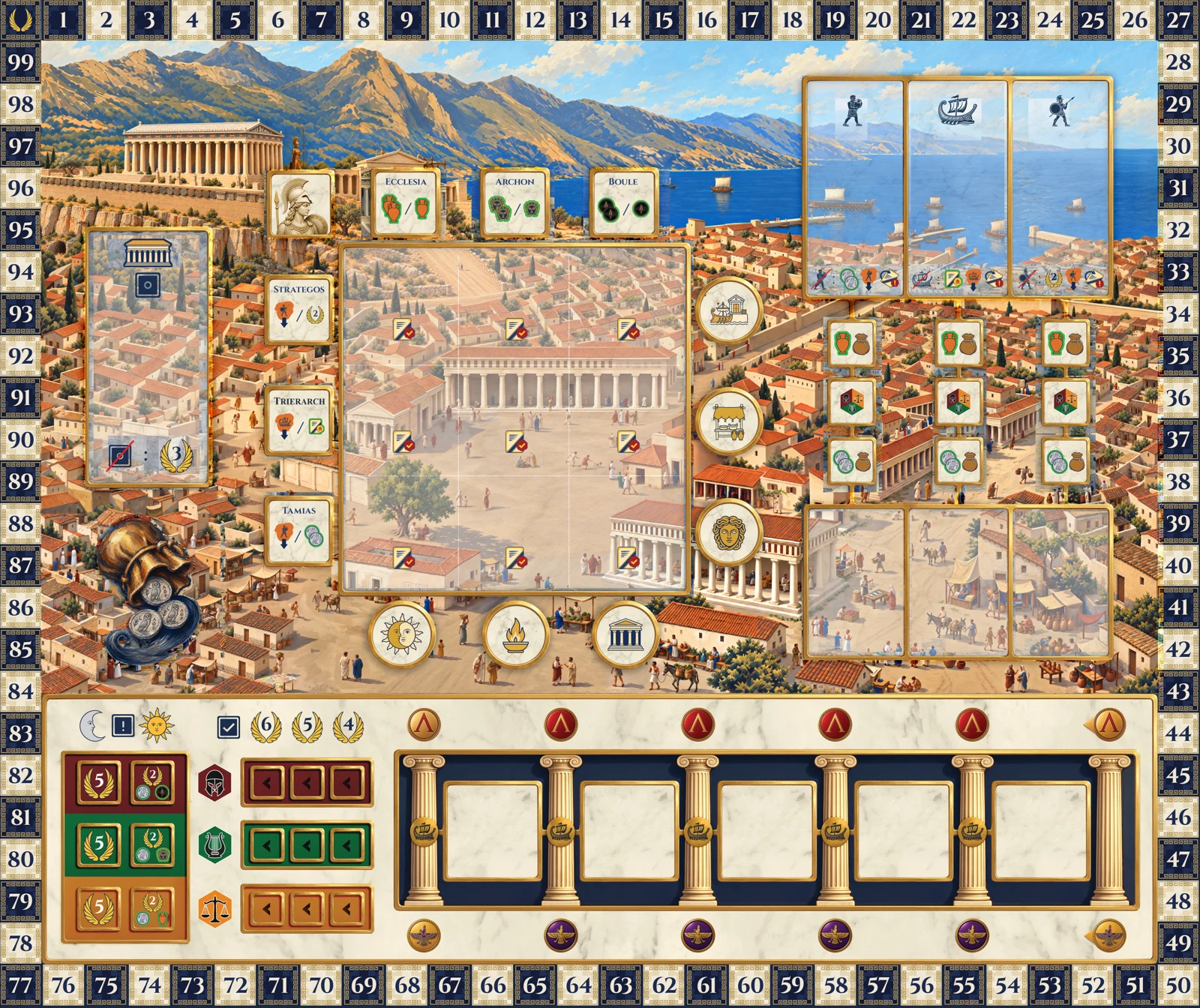
The Athens board, with every region labelled in blue and the on-board setup steps marked in red. Learn these before your first game; the Ostracized Camp (L) is a separate tile beside the board.
VIII. How a Game Flows

A game is played over rounds, each with two phases — Assembly then Governance — until the Parthenon or the Delian League is complete.
1. The Assembly · your turn
In turn order (clockwise from the First Player; a player who cannot place is skipped), place one Citizen on an Agora space holding no other Citizen of yours (several players may share a space). Each Citizen may take the space’s action, then takes its Main Action(s):
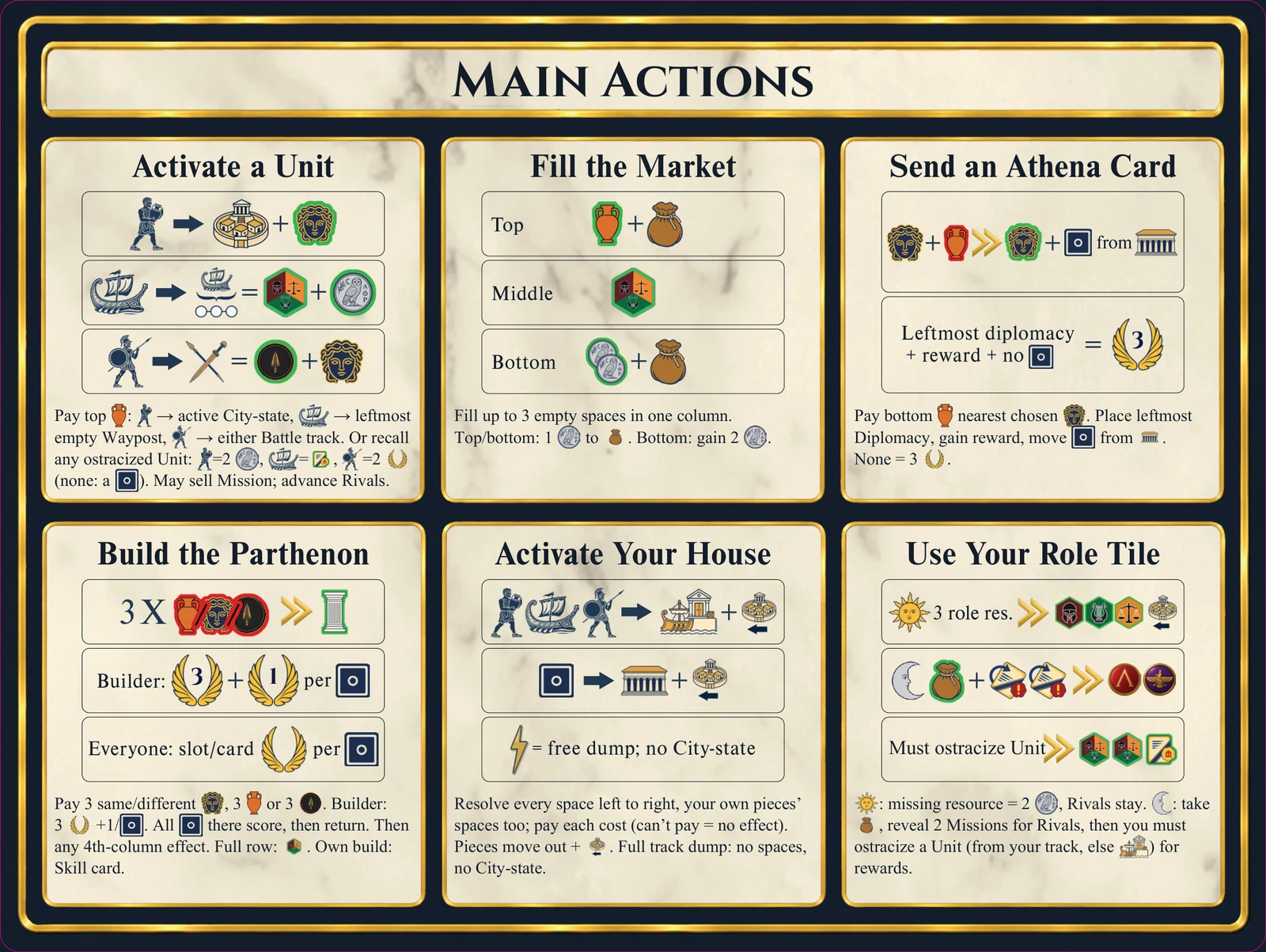
 Small Citizen — the space’s action (optional), then choose one Main Action: either the one at the end of its row or the one at the foot of its column.
 Large Citizen — the space’s action (optional), then both of those Main Actions, in either order.
Space action — optional: you may take it before your Main Action(s). On an untiled space it is: reveal a fulfilled Mission for its reward; on a tiled space, the City-state tile’s printed action. See Reading a Mission card on p. 18.
 Military
 Economy
 Culture
 Universal
 Activate a Unit
 Fill the Market
 Send an Athena Card
 Build the Parthenon
 Activate Your House
 Use Your Role Tile
Every component is strictly limited. An empty Market column cannot pay for its cards or Units; an empty Reserve means those gains are lost. A revealed Athena card is discarded once used; offer cards stay. The Athena, Mission, and Skill decks reshuffle their discards when empty (if a deck and its discard are both empty, that draw is skipped). Nothing else reshuffles or substitutes.
 Rule · Corruption
Some Market rows and City-state effects add Silver to the Corruption offer on the board. When you use the Night side of your Role, take all Silver from the Corruption offer, then reveal 2 Mission cards to advance the Rivals.
Several card and Night-side effects ostracize a piece: send a Unit or Diplomat to the Ostracized Camp. At game end your pieces still there cost you Glory on a steeply rising scale — 1 piece −1, 2 pieces −4, 3 pieces −9, 4 pieces −16, 5 pieces −25, and so on: the count multiplied by itself (p. 17). Bring them back with the Activate a Unit Recall (p. 10) or by winning an Office in Governance (p. 16).
IX. Activate a Unit
1. Activate a Unit
Send a Worker, Ship, or Hoplite out from Piraeus — to draw in a City-state, hold the sea, or man the battle line.
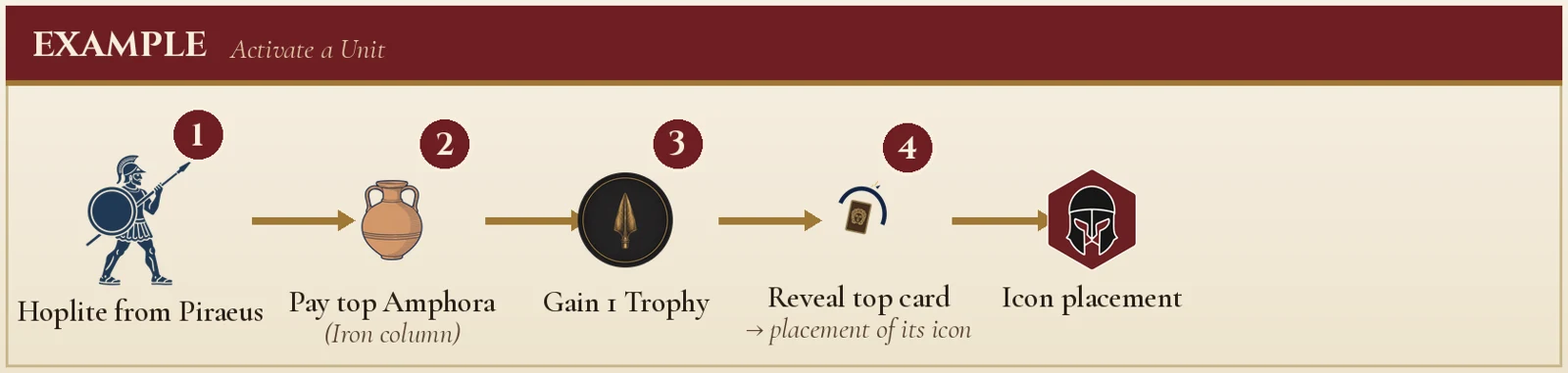
Send one Unit from Piraeus, paying the topmost Amphora in its Market column (empty = cannot send):
 Worker → the active City-state tile (with no active tile you cannot send a Worker). A Worker already there goes home. Gain the City-state’s icon placement, then an Athena card.
 Ship → the leftmost empty Waypost (a Ship never knocks another Ship home). Gain 1 Universal placement + 1 Silver.
 Hoplite → choose Sparta’s or Persia’s Battle track and take its leftmost free space. Gain 1 Trophy, then reveal an Athena card, gain a placement of its type and discard it.
Recall (instead of sending, whenever you have a piece in the Ostracized Camp): bring home any one of your ostracized Units, of any type, for its reward (Worker 2 Silver · Ship 1 Mission · Hoplite 2 Glory); if you have no ostracized Unit, bring home an ostracized Diplomat instead. With nothing to send and nothing to recall, you cannot take this action. After bringing a Unit home you may sell a Mission: discard one unfulfilled Mission for 3 Silver (a second for 3 more) — a fulfilled Mission cannot be sold. If you sell at least one, flip your Role to the Day side; if you sell none, your Role stays as it is. Then advance the Rivals.
Units return home to the leftmost empty space of your Unit track. Moving a City-state (named by several actions): if no City-state is active, the move makes the top tile of the stack the active City-state on the rightmost Diplomacy-track space, and that is the whole move. Otherwise the active City-state moves one space toward Athens; a Ship on a Waypost it crosses returns home. Past the last space it integrates: any Worker on it goes home, then you place it on a free Agora space and Athens builds (p. 12). The next move makes the next tile active. With no active tile and an empty stack, a move does nothing.
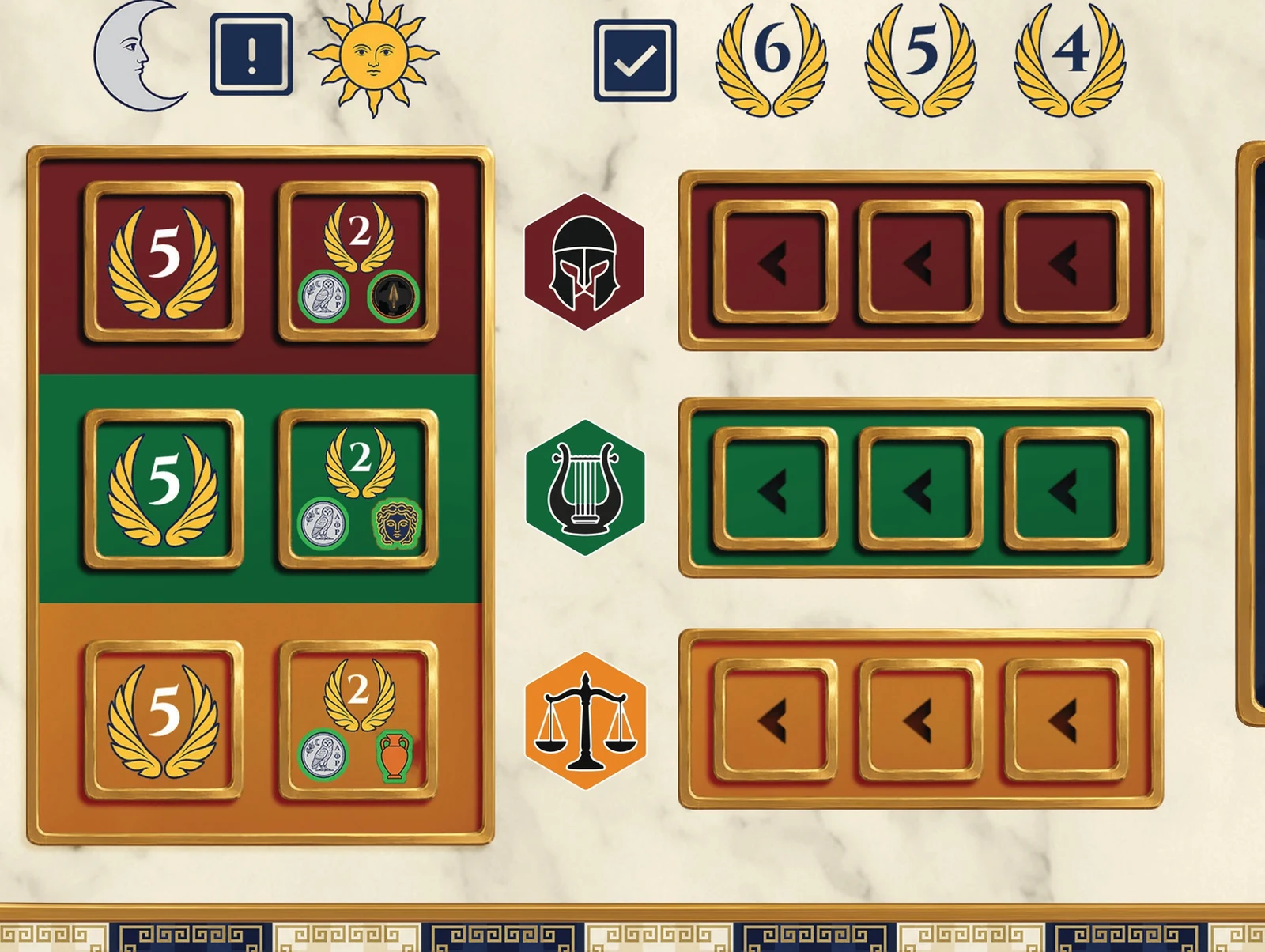
The three Progress rows — Military, Economy, Culture — each have three slots worth 6 / 5 / 4 Glory. A new Diplomat enters at the 4 and pushes the row left; a Diplomat shoved off the 6 is knocked out, returning home for Compensation (Athena cards on the Diplomacy track continue a row beyond the 6, scoring their own value). Rows pay out whenever they are scored — on a Build (p. 12), in Battle (p. 15), and at game end (p. 17). A knocked-out Diplomat never scores its slot or a card’s printed Glory; it takes the Compensation table reward instead. The Compensation table beside the track sets what a knocked-out — or, in Battle, undefended — Diplomat earns: Night 5 Glory; Day 1 Silver + 2 Glory + the row’s good (Trophy · Amphora · Athena card). The same table follows every Battle (p. 15).
X. Fill the Market and Send an Athena Card
1. Fill the Market
Restock the Emporion — and take a reward for every space you refill.
Choose one Market column and fill its empty spaces from the Reserve (max 3). For each space filled, gain its row’s reward:
| Row | Reward for each space you fill |
|---|---|
| Top |  1 Amphora to your Storage, and put  1 Silver into Corruption |
| Middle | 1 Universal icon placement |
| Bottom | 2 Silver, and put 1 Silver into Corruption |
2. Send an Athena Card
Send a statesman, idea, or civic project out into the Aegean. The card becomes an extension of the Progress track and may score later.
3. Choose, pay, and send
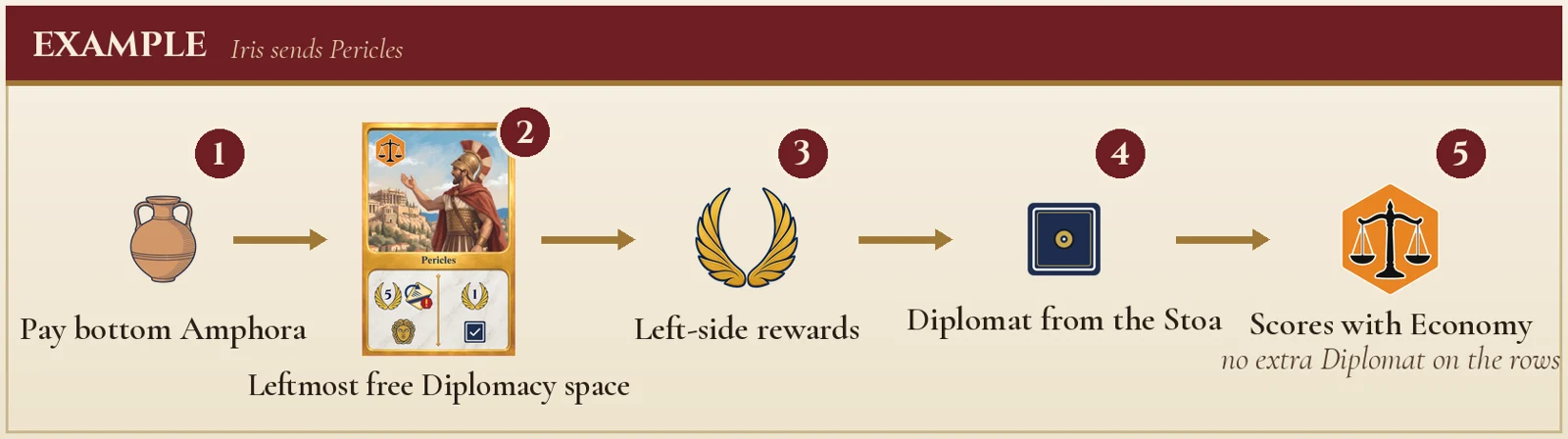
- Choose one of the 3 face-up Athena cards. Pay the bottommost Amphora in the Market column nearest that card. If that column is empty, you cannot send it.
- Place the card on the leftmost free Diplomacy-track space. If no space is free, you cannot take this action.
- Gain every reward shown on the card’s left side.
- Assign a Diplomat. Move one from your Stoa onto the card’s hex. If your Stoa is empty, gain 3 Glory instead.
4. Card movement and collisions
Offer cards never slide; refill the empty offer space at the end of your turn. When the Athena deck empties, shuffle its face-up discard into a new deck (if deck and discard are both empty, skip the draw). When a travelling City-state reaches an Athena card, discard it and return its Diplomat to its owner’s Household with Compensation (p. 10).
XI. Build the Parthenon
1. Build the Parthenon
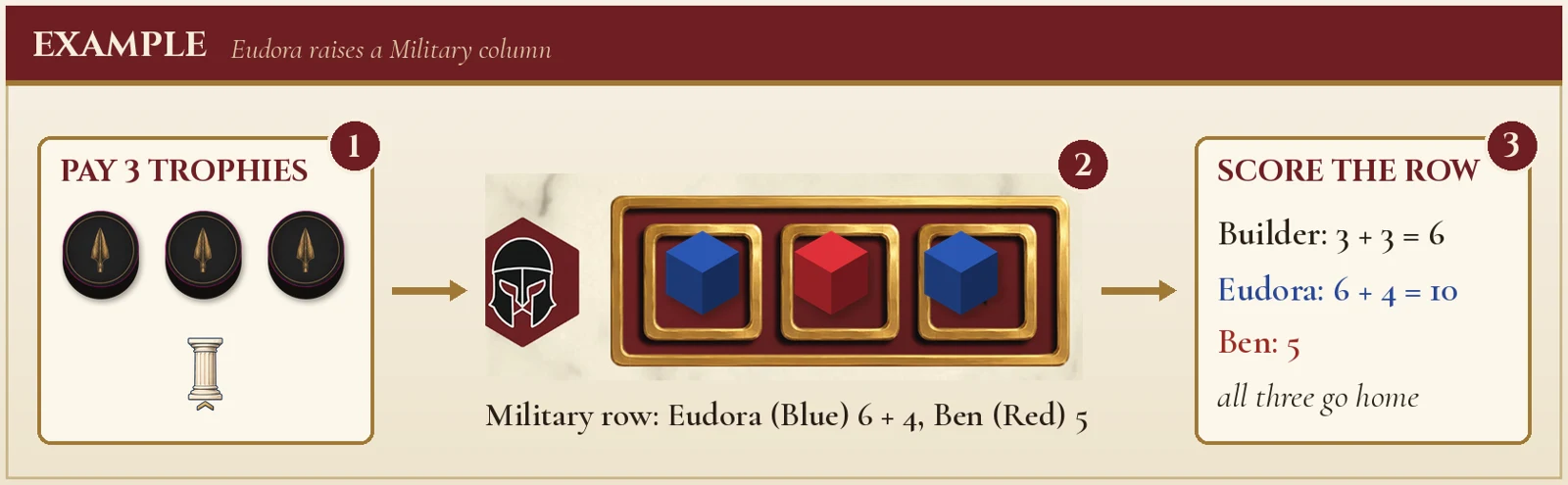
Pay one complete cost, raise one column or eligible roof piece, then score the Progress row you chose.
| Pay exactly one | |
|---|---|
| 3 Athena cards with the same icon | 3 Athena cards with three different icons |
| 3 Amphoras | 3 Trophies |
Discard paid cards; return paid Amphoras and Trophies to the Reserve. Choose Military, Economy, or Culture and build its next column; if all 4 of that type stand, build on a Universal space. Each roof covers one half of the temple: the upper roof becomes eligible when all 10 columns of its half stand (4 Culture, the 4 upper Universal, the 2 upper Economy), the lower roof when the other 10 stand (4 Military, the 4 lower Universal, the 2 lower Economy). Build and score a roof like any column.
Skill gain: draw 1 Skill more than the pieces you raised (1 column → draw 2), keep 1, discard the rest. An Athens build never grants Skills.
2. Score the chosen row
- The builder gains 3 Glory + 1 per Diplomat in that row, including matching cards on the Diplomacy track (Universal matches every row).
- Every Diplomat in the row pays its owner the Glory of its slot or occupied card.
- Return all scored Diplomats to their owners’ Households.
- If you raised the 4th column of its type, apply its completion effect (table) now. Then draw your Skills.
| Fourth column completed | Effect, right after scoring |
|---|---|
| Military | All Hoplites return home; reset both Rivals; move the active City-state 2 spaces. |
| Economy | Refill the Market. Each player may freely move either all Units to Piraeus or all Diplomats to the Stoa. |
| Culture | Each player retrieves one Small Citizen from the Agora or gains 10 Glory. |
 Athens builds
Governance, battle, and integration may make Athens build. Reveal the top Athena card, raise its row’s next column and discard the card. Nothing is scored — no row payout, no builder reward — and every Diplomat in that row stays where it is. For Universal, the First Player chooses the row. Completion effects still trigger.
XII. Activate Your House and Use Your Role Tile
1. Activate Your House (Oikos)
Choose one:
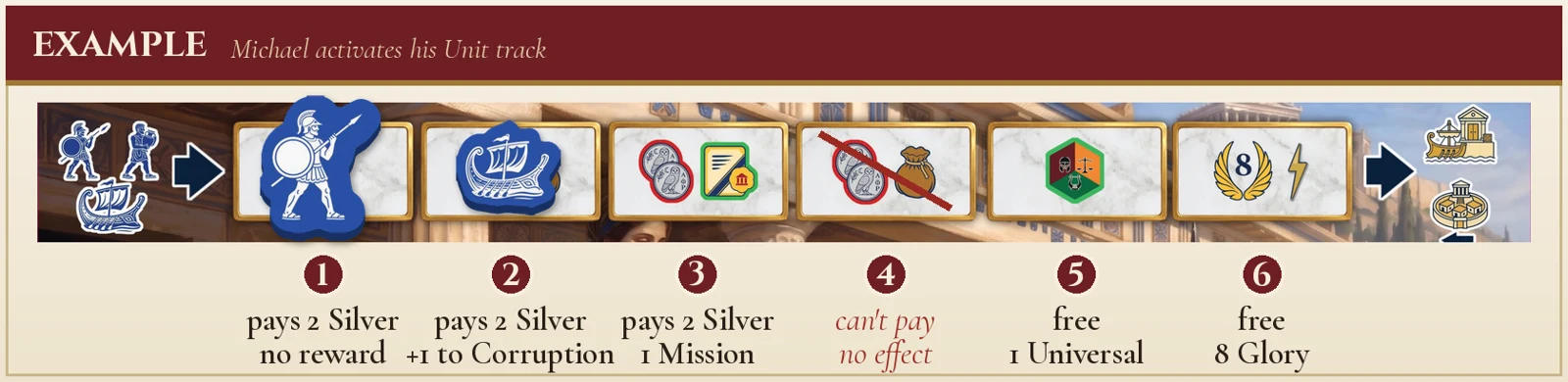
- a) Unit track — resolve every space from the first, left to right, including spaces your own Units occupy. Pay each cost as printed; a space whose cost you cannot pay does not resolve. Then move your Units to Piraeus and move a City-state.
- b) Household — the same for every Household space, including spaces your own Diplomats occupy. Then move your Diplomats to the Stoa and move a City-state.
Full-track dump: a full Unit track or Household immediately empties to Piraeus / the Stoa for free (no action, no costs/rewards, no City-state move).
2. Use Your Role Tile
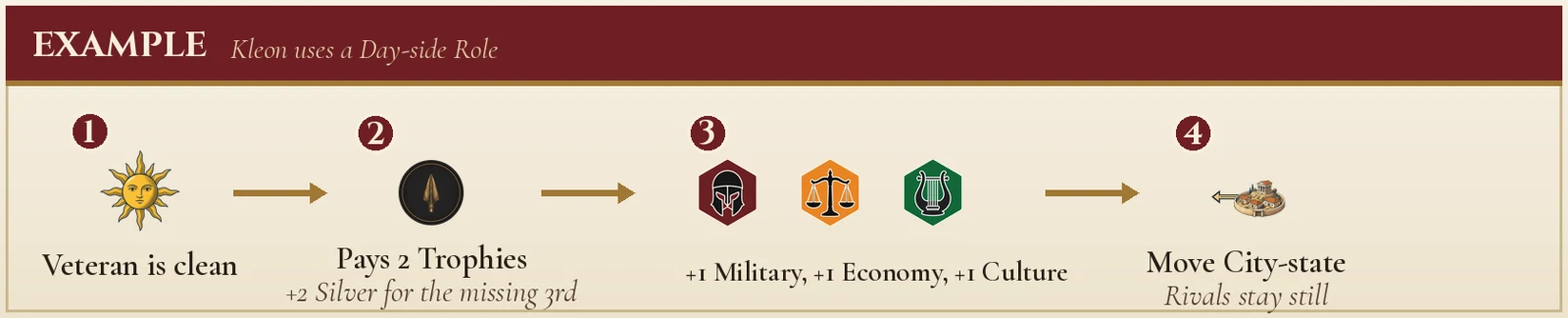
Day side (clean): spend 3 of your Role’s resource (2 Silver in place of each one you lack — or would rather keep) — Veteran/Matriarch: Trophies; Sophist/Oligarch: Athena cards; Hetaira/Priestess: Amphoras. Gain 1 Military + 1 Economy + 1 Culture placement, then move a City-state 1 space.
Night side (corrupt): if on Day, flip now (only one player is corrupt at a time — this flips the previous one back). Take ALL Silver from the Corruption offer. Then reveal 2 Mission cards to advance the Rivals; apply both movements before any Battle resolves. Then immediately send one Unit to the Ostracized Camp and gain 2 placements of your choice + 1 Mission. This is mandatory: no card or effect lets you decline it. The Unit comes from your Unit track; only if your Unit track is empty, from Piraeus. If you have no Unit in either place, you send none and gain nothing for it. Only selling a Mission when you bring home an Ostracized Unit (or another player going corrupt) returns you to Day.
XIII. Sparta and Persia

Secret Missions tempt you with Glory while the same deck determines how quickly Sparta and Persia close on Athens.
1. Hold, score, or sell
Keep your Missions secret. When you place a Citizen on an untiled Agora space, its optional space action may reveal one fulfilled Mission side; show the condition, gain that side’s reward, then discard the Mission. The other side is ignored. When you bring a Unit home from the Ostracized Camp (Activate a Unit, p. 10), you may sell a Mission: discard one unfulfilled Mission for 3 Silver (a second for 3 more); if you sell at least one, flip your Role to the Day side. A Mission you have already fulfilled cannot be sold.
When the Mission deck empties, shuffle the whole Mission discard — including every card revealed to advance the Rivals — to form a new deck. One exception: a Mission revealed by the Demagogue leaves the game instead of going to the discard (p. 21).
2. Advance the Rivals
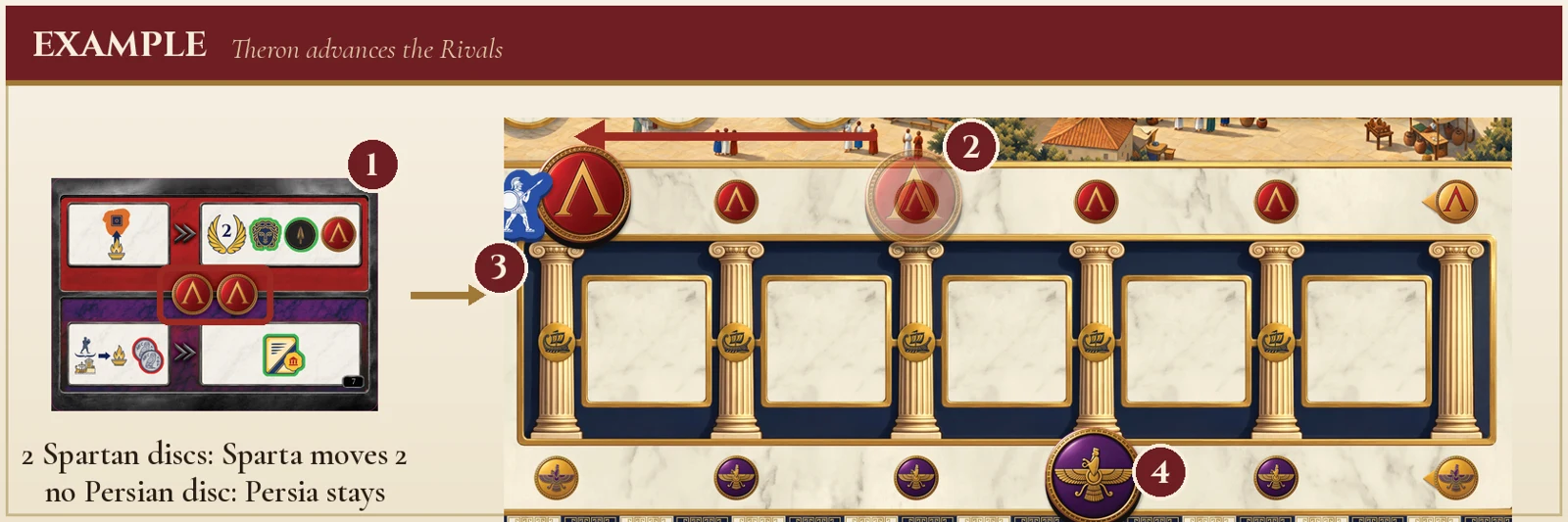
Whenever an effect says advance the Rivals, reveal the top Mission. Look at the band between the card’s two halves: each disc advances that Rival 1 space toward Athens (a Spartan disc moves Sparta, a Persian disc moves Persia). No disc means that Rival stays put. Then discard that Mission.
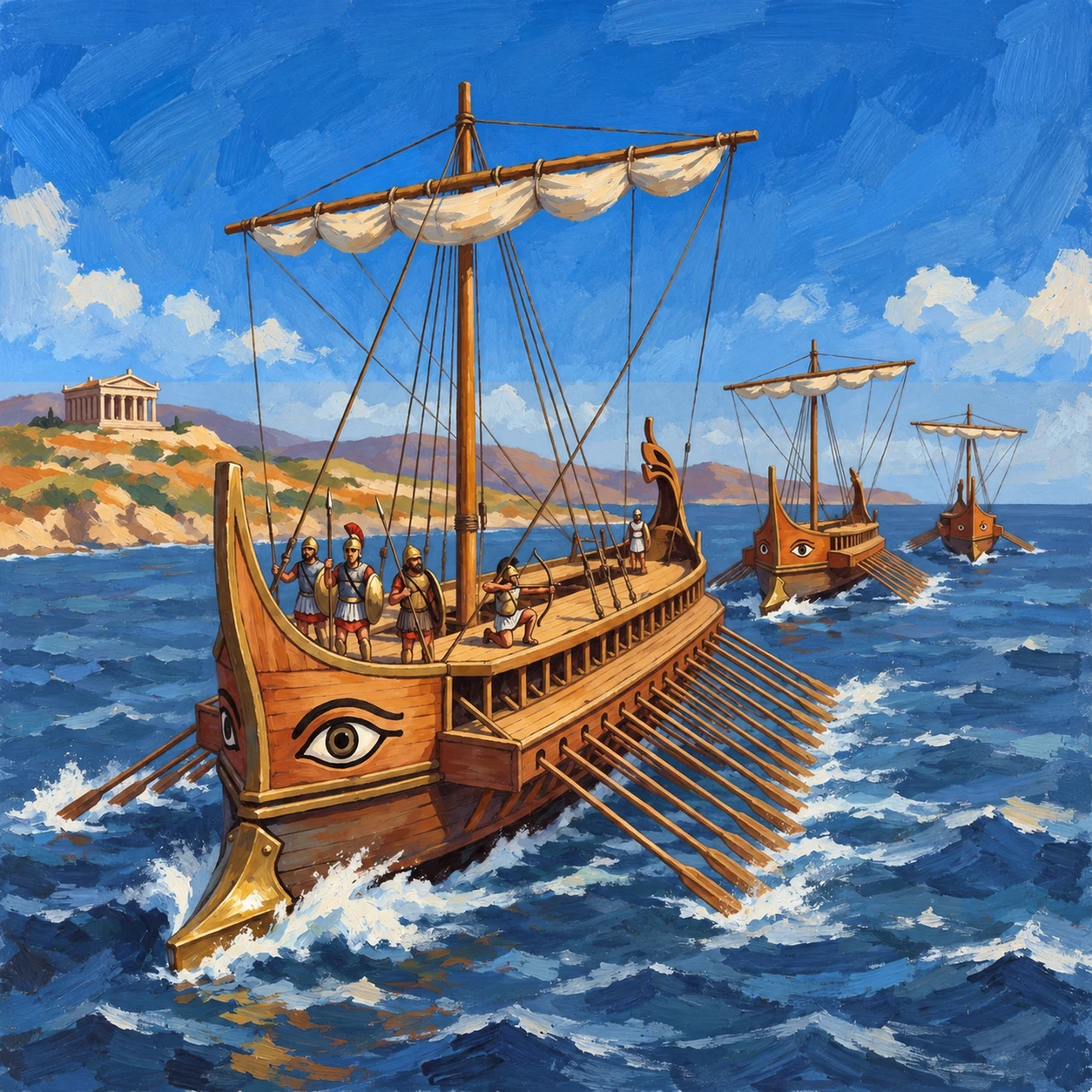 From the Histories · two powers press the League
Persia — vast, wealthy, patient — fought as readily with gold as with armies; Sparta, whose hoplites were the finest in Hellas, distrusted Athens more with every course of the Long Walls. Thucydides judged that growth the truest cause of the war that ended the golden age. Every Mission you hold is a share of that pressure — the same deck that tempts you with Glory marches both powers toward Athens.
XIV. Battle: Hold the Line
A Battle does not destroy the Progress track. It forces every attacked Diplomat home — rewarded if defended, compensated if exposed.
- Reveal 2 Athena cards. Each card attacks the Progress row matching its main hex; discard both once the attacked rows are known. Two identical icons attack one row; different icons attack two. A Universal icon attacks all three.
- Defend, starting with the active player. Each of your Hoplites on either Battle track may defend one attacked row. All of your Diplomats in that chosen row are defended. A Diplomat on a Universal card is at risk whenever any row is attacked, is resolved once per Battle, and is defended if one of your Hoplites defends any attacked row.
- Resolve attacked rows. Every Diplomat there returns to its owner’s Household. Defended Diplomats score their slot or card. Undefended Diplomats receive Compensation instead; on a Universal card, the owner chooses the good.
- Aftermath. Return all Hoplites home and reset only the Rival that fought to its starting space; the other Rival does not move. If a second Battle follows at once, nobody has a Hoplite left to defend it.
- Athens rebuilds. Athens builds one column (p. 12). Battle grants no Skills — only your own Build action does (p. 19).
| Owner’s Role side | Compensation per undefended Diplomat |
|---|---|
 Night | 5 Glory |
 Day | 1 Silver + 2 Glory + the row’s good: Trophy (Military), Amphora (Economy), Athena card (Culture) |
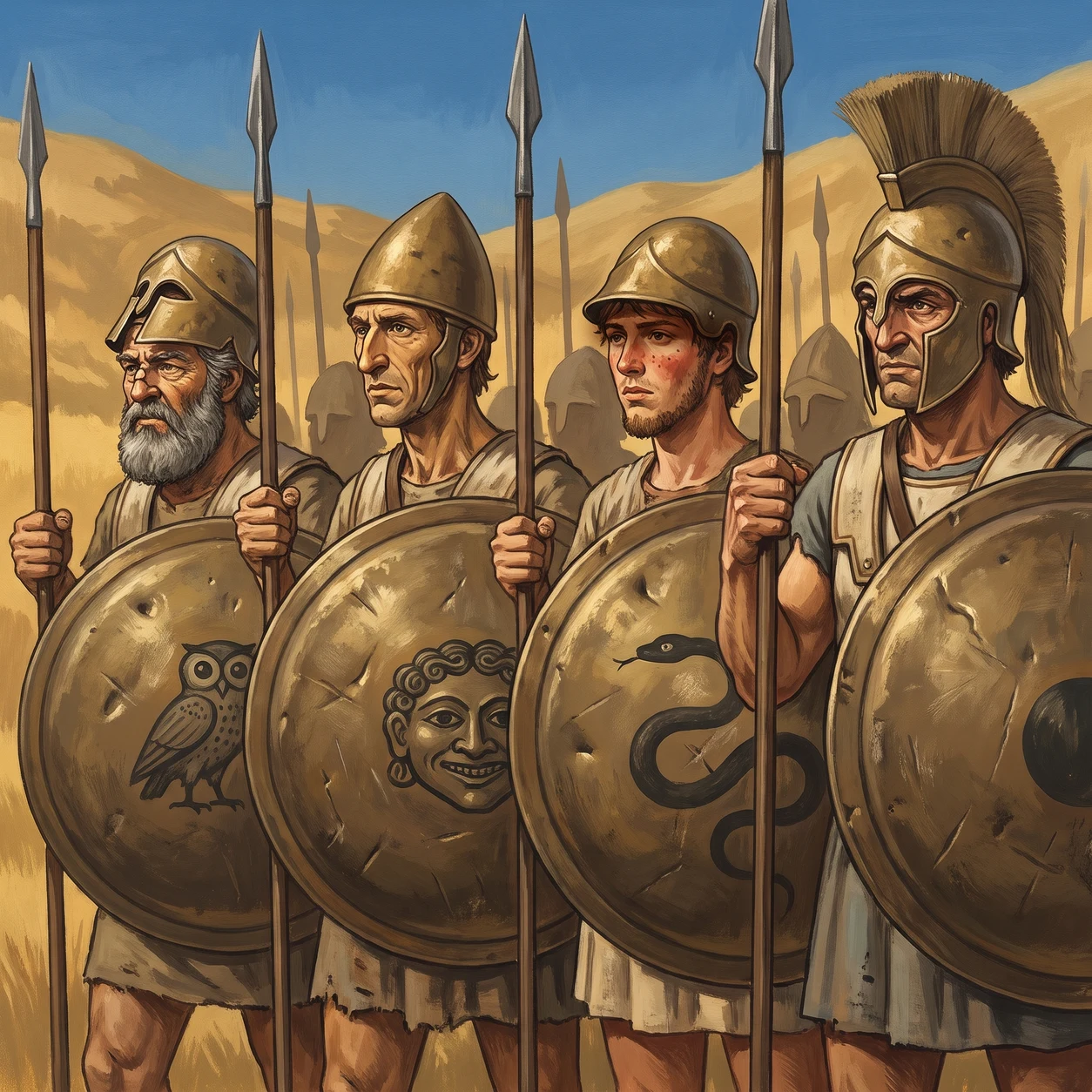 From the Histories · the phalanx and the tropaion
Athens held her ground behind a wall of shields: the phalanx, rank on rank of citizen-hoplites, each man’s shield guarding his neighbour. When the enemy broke, the victors raised a tropaion where they turned to flee. The Trophies you win in Battle are exactly these: proof the line held. Captured enemy trophies were prominently displayed in the Agora, smeared with pitch to prevent decay.
XV. Governance

When no one can place a Citizen, Athens weighs the Assembly. Resolve Governance in the exact order below. An Official bringing your piece home is not an Activate-a-Unit Recall: it gives no Unit reward and does not advance the Rivals.
Each Official evaluates the Agora row or column it adjoins — Tamias/Trierarch/Strategos the rows, Ecclesia/Archon/Boule the columns. A Large Citizen counts as 2, a Small as 1; an Official with no Citizen in its line grants nothing.
- Tamias (row). The majority holder brings their Worker home from the Ostracized Camp; with no Worker there they instead bring home an ostracized Diplomat or gain 2 Glory, their choice. Tie: each tied player gains 2 Silver.
- Trierarch (row). The majority holder brings their Ship home from the Ostracized Camp; with no Ship there they instead bring home an ostracized Diplomat or gain 1 Glory, their choice. Tie: each tied player gains 1 Mission card.
- Strategos (row). The majority holder brings their Hoplite home from the Ostracized Camp; with no Hoplite there they instead bring home an ostracized Diplomat or gain 5 Glory, their choice. Tie: each tied player gains 2 Glory.
- First Player. The majority on the diagonal (top-left→bottom-right) takes the First Player token. Tie: the first tied player in turn order after the current First Player takes it.
- Ecclesia (column). Majority: 2 Amphoras; tie 1.
- Archon (column). Majority: 2 Athena cards; tie 1.
- Boule (column). Majority: 2 Trophies; tie 1.
- Return Citizens to their owners.
- Athens builds one column into the Parthenon (see “Athens builds”, p. 12).
- Integrate a City-state: the First Player places the top stack tile onto a free Agora space, Normal side up (skip if the stack is empty). This placement does not make Athens build again.
- Citizen unlock: end of Round 1 take your Large Citizen; end of Round 2 your last Small Citizen. Then begin the next round.
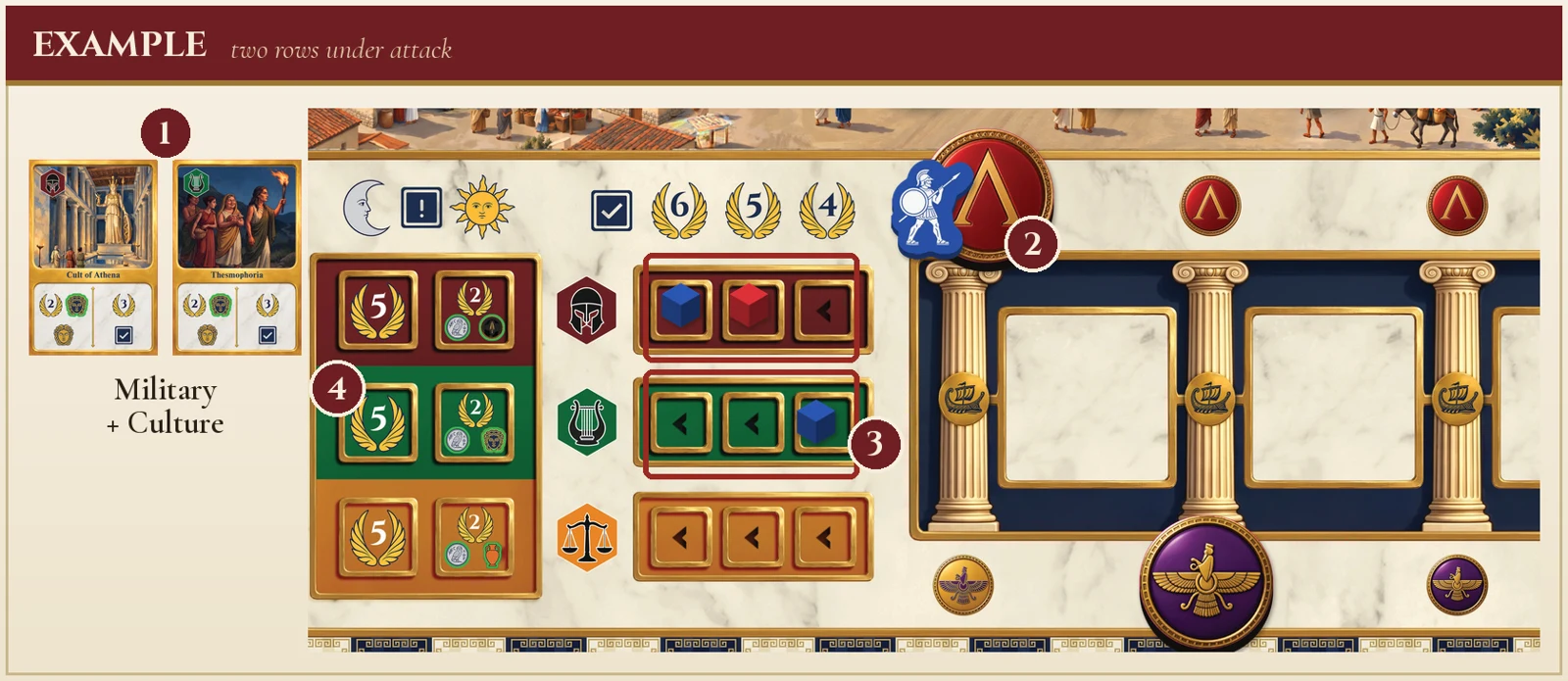
Three Agora spaces of the top (Strategos) row are occupied. Blue has a Large (counts 2) + a Small (1) = 3; Red has a Large = 2. Blue holds the majority and brings a Hoplite home from the Ostracized Camp (with no Hoplite there: an ostracized Diplomat, or +5 Glory). Were it a tie, each tied player would take 2 Glory instead.
 From the Histories · offices by lot and by vote
Most Athenian offices were filled by lottery — a guard against wealth buying power. The exceptions were jobs where incompetence killed: the ten strategoi were elected. Pericles held the post year after year — one general among ten, in practice the first man of Athens.
Governance turns the Assembly’s decisions into the city’s work.“Instead of looking on discussion as a stumbling-block in the way of action, we think it an indispensable preliminary to any wise action at all.”Thucydides 2.40 · trans. Richard Crawley
XVI. Game End and Victory

The game ends immediately when either the Delian League is complete (a tile covers every Agora space) or the Parthenon is complete (every column filled and both roofs built). Finish the current effect, then go to Final scoring.
1. Final scoring
- At home. Each Unit and Diplomat on your Oikos board: 1 Glory.
- On the track. Each Diplomat on the Progress track scores its slot (6/5/4); on a Diplomacy-track card, the value printed on it.
- Ostracized. Count all your pieces there together: 1 = −1 · 2 = −4 · 3 = −9 · 4 = −16 · 5 = −25 · 6 = −36; for any number of pieces, multiply the count by itself.
- Unused Citizens. Large 20, Small 10: each Citizen you have unlocked but did not place this round. Locked Citizens score nothing; a Citizen Governance has just returned to you counts as used.
- Unfulfilled Missions. 2 each (max 10). Silver: 1 each (max 10).
- Goods — each kind scored separately (Amphoras, Trophies, Athena cards): 1 = 1 · 2 = 4 · 3+ = 10.
- Skill cards: score any game-end Glory they grant. Tucked Skills count too — reveal them now.
Most Glory wins. Tie: the tied player with the most Silver. Still tied: shared victory.
Kalliope’s leftover goods score by kind: ×2 = 4,  ×1 = 1,
 ×2 = 4. Her ×4 = 4. Four Units and Diplomats sitting at home = +4. Three Diplomats still on the Progress track (slots 6/5/4) = +15. One unlocked-but-unused Small Citizen = +10. One Unit left in the Ostracized Camp = −1. Kalliope adds 41 Glory to the total her marker already shows on the Glory track.
Finish the current effect. Complete its row scoring and completion effect, then stop — the Assembly, Governance, and the round are not finished.
Athens remembered her great men unevenly — Pericles in marble, Themistocles in exile, Alcibiades in both. Glory was awarded, withdrawn, and re-awarded by the same fickle Assembly. Win, and the city calls you first among Athenians — until the next vote.
The city honours her patrons — and remembers them unevenly.XVII. Mission Cards
Mission cards are both private opportunities and the engine that pushes Sparta and Persia toward battle.
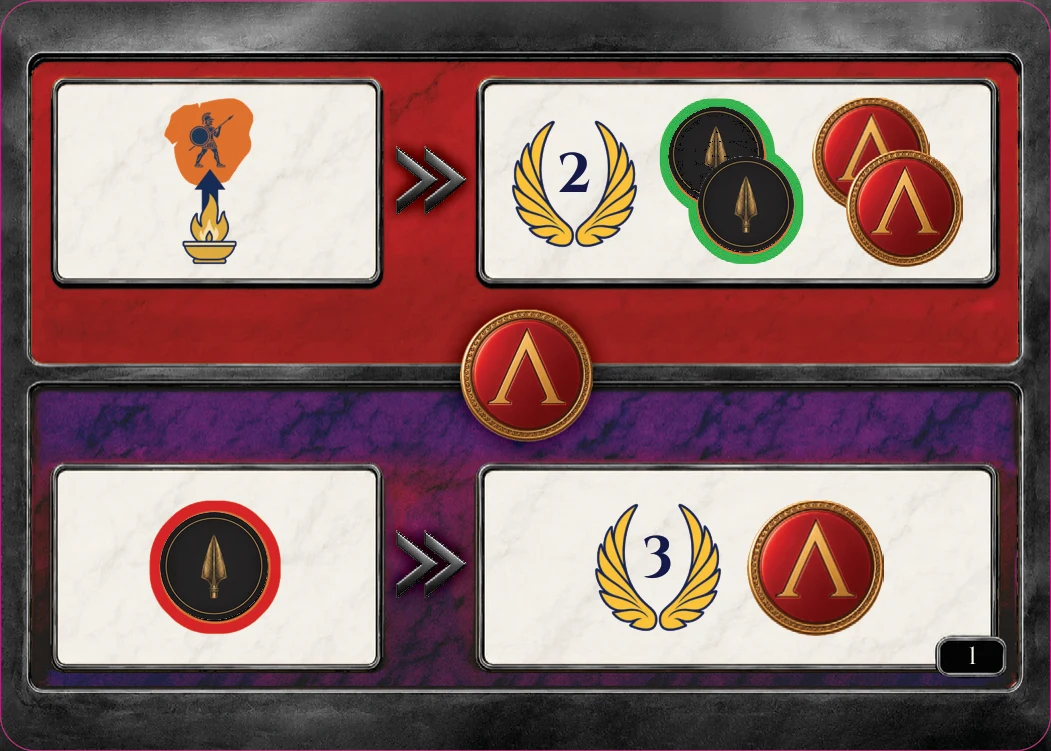
Each Mission has two halves: the red top is Sparta, the purple bottom is Persia. Read each half left→right.
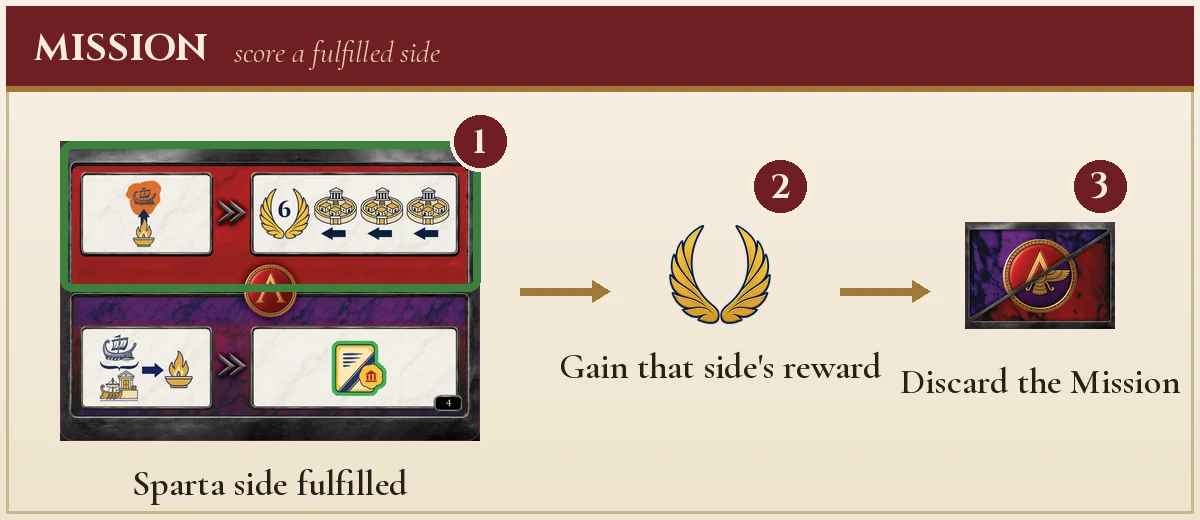
Iris has fulfilled the Sparta side of a Mission. She places a Citizen on an untiled Agora space and uses the space action: she shows the fulfilled condition, gains that side’s reward, discards the Mission, and ignores the Persia half.
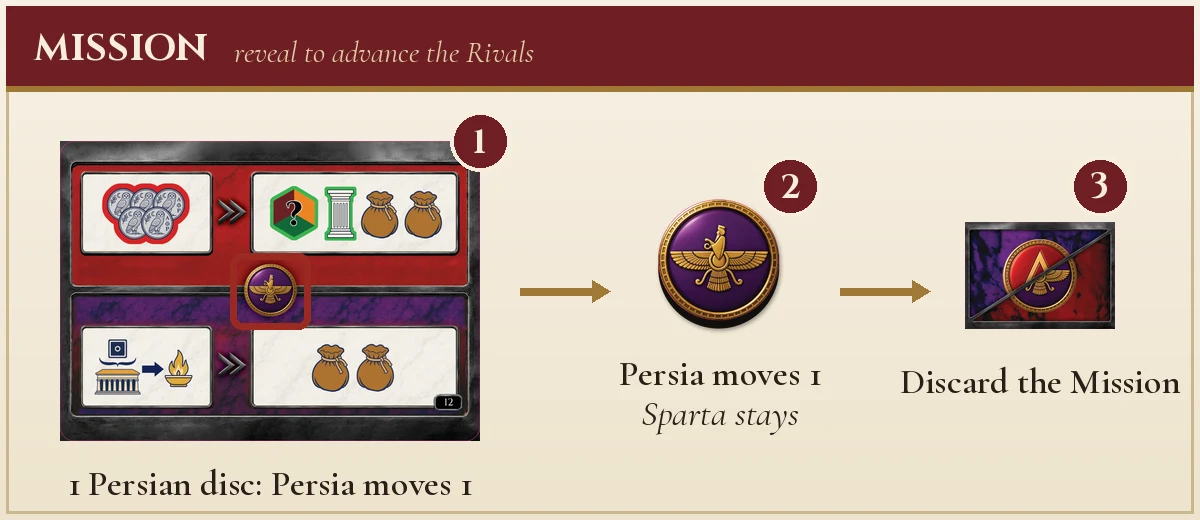
Theron recalls an ostracized Ship and must advance the Rivals. He reveals the top Mission: its centre band holds one Persian disc, so Persia moves 1; there is no Spartan disc, so Sparta stays. Then he discards that Mission.
Every Athenian ambition had a counterweight: Spartan land power, Persian money and diplomacy, allied resentment, and the pressure to keep the League together. Missions turn that pressure into private temptation.
XVIII. Skill Cards
Skill cards are permanent passive powers, kept face up in front of you. They reward the act players already fight over: raising the Parthenon.
1. Starting Skills
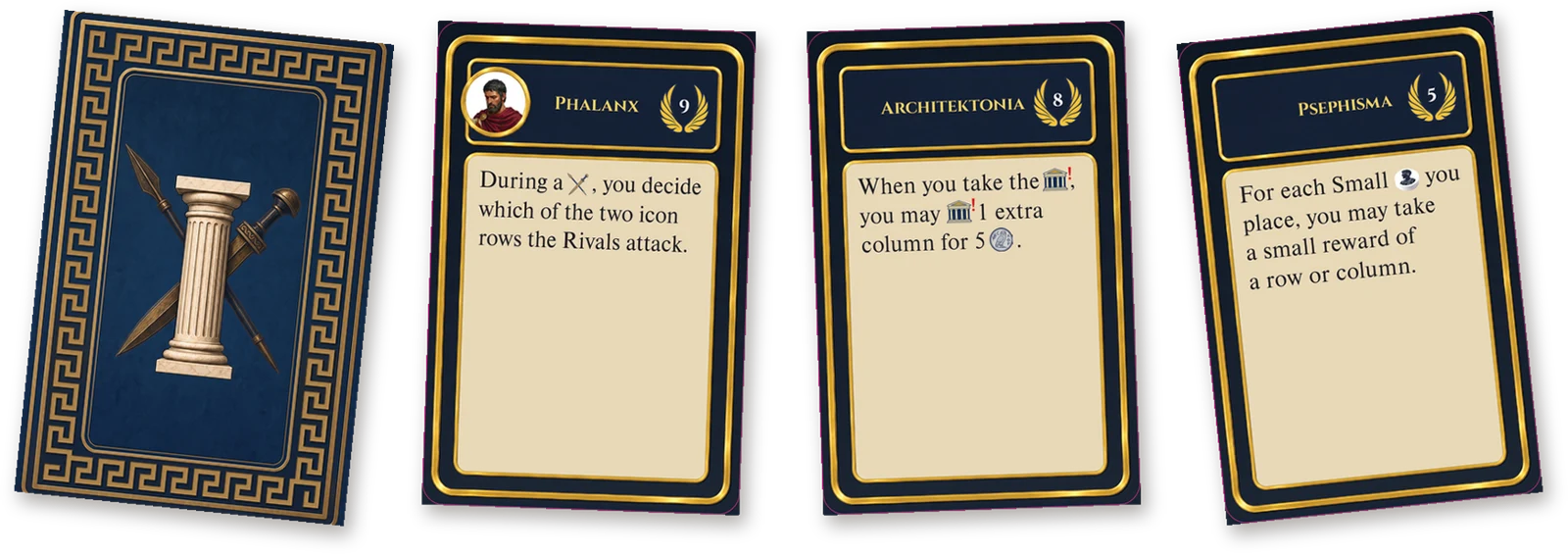
When you draft your Role, choose 1 of that Role’s 2 starting Skill options. Return the unchosen Skill to the deck, then shuffle.
| Role | Starting options |
|---|---|
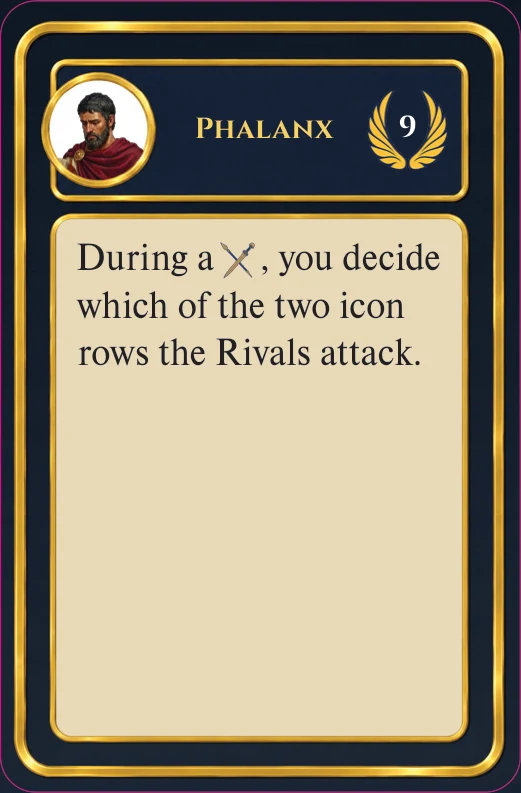
| Veteran | Phalanx or Andreia |
| Matriarch | Poine or Proxenia |
| Sophist | Presbeia or Symmachia |
| Oligarch | Pleonexia or Hybris |
| Hetaira | Emporia or Agoranomos |
| Priestess | Promanteia or Prostasia |
2. How you gain Skills
- Build the Parthenon. When you take the Build the Parthenon action and raise a column or roof, draw one Skill more than the number of pieces you raised — one column means draw 2 — then keep 1 and discard the rest. Only 1 Skill per Build action.
- Nothing else grants Skills. Athens builds do not, and Battle does not: holding the line pays you in Trophies, Compensation and scored Diplomats, not in Skills.
You may gain at most 1 Skill per round. You may have at most 3 Skills face up. When you gain a 4th Skill, do not discard it: tuck 1 of your 4 Skills (it may be the new one) face down under your Oikos board. A tucked Skill’s power is off for the rest of the game and it may not be turned face up again, but it still counts as your Skill card for game-end scoring (p. 17). Tucked Skills stay face down until game end. Empty Skill deck: shuffle the Skill discard. Deck and discard both empty: skip the gain.
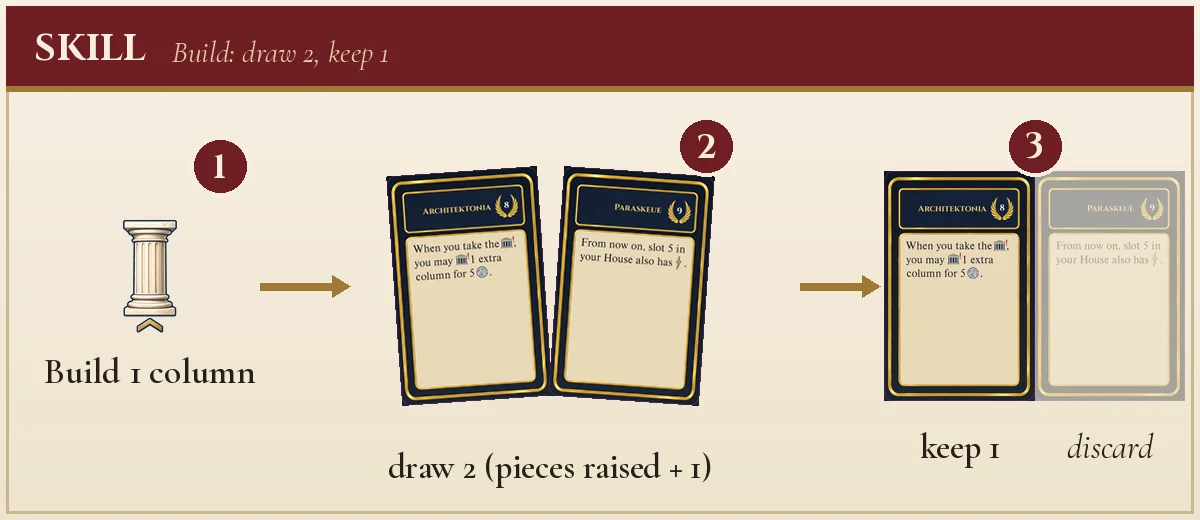
Demos pays 3 Trophies and raises the next Military column, then scores the Military row. Because he raised one piece, he draws 2 Skills, keeps 1, and discards the other. Had Athens built that column for him — through Governance, integration, or a Battle — he would gain no Skill at all.
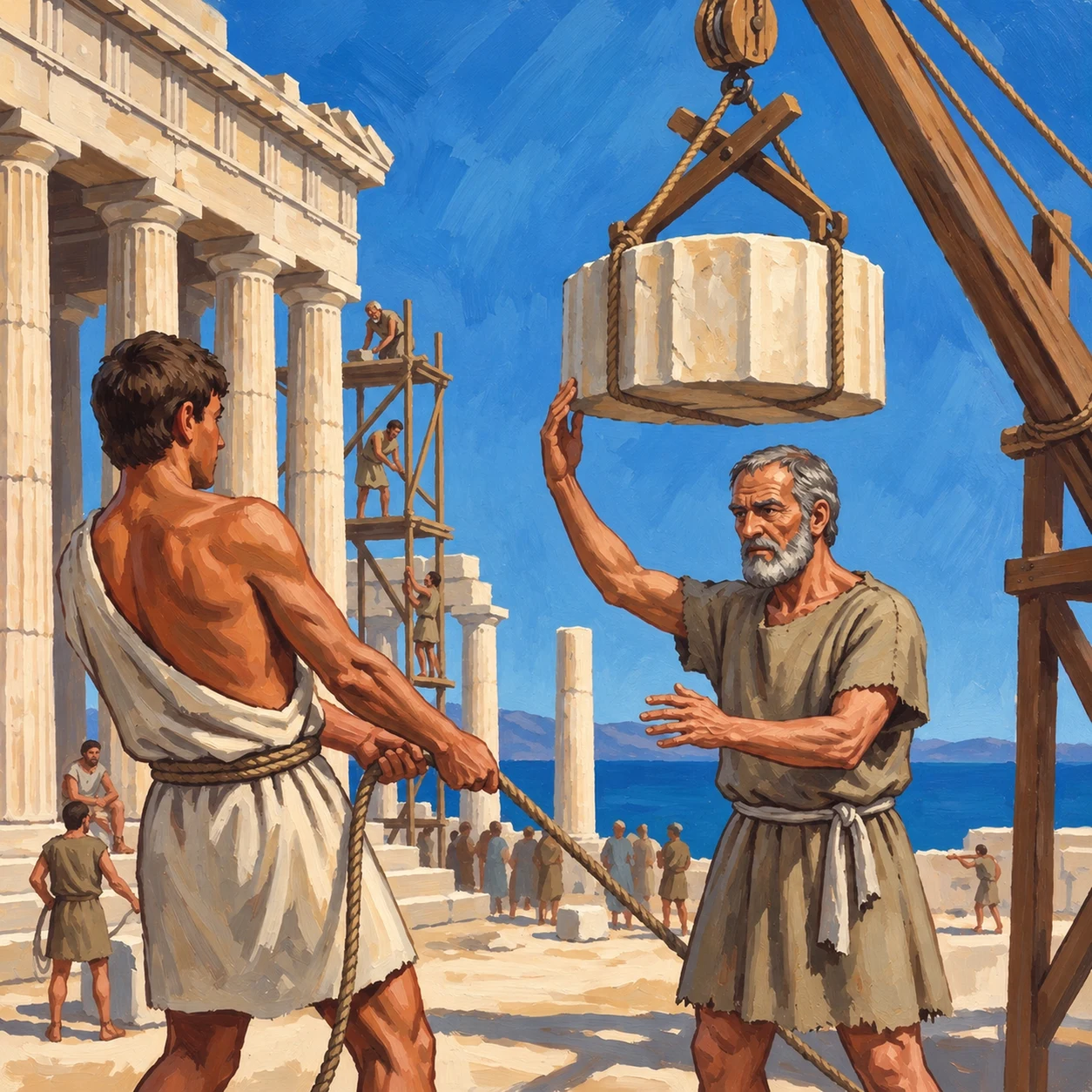 From the Histories · habits of excellence
In play, a Skill is not a spell or a one-off trick. It is what your House becomes known for: better command, sharper accounting, stronger rhetoric, or a patronage network that keeps paying back.
XIX. Athens and the City-States
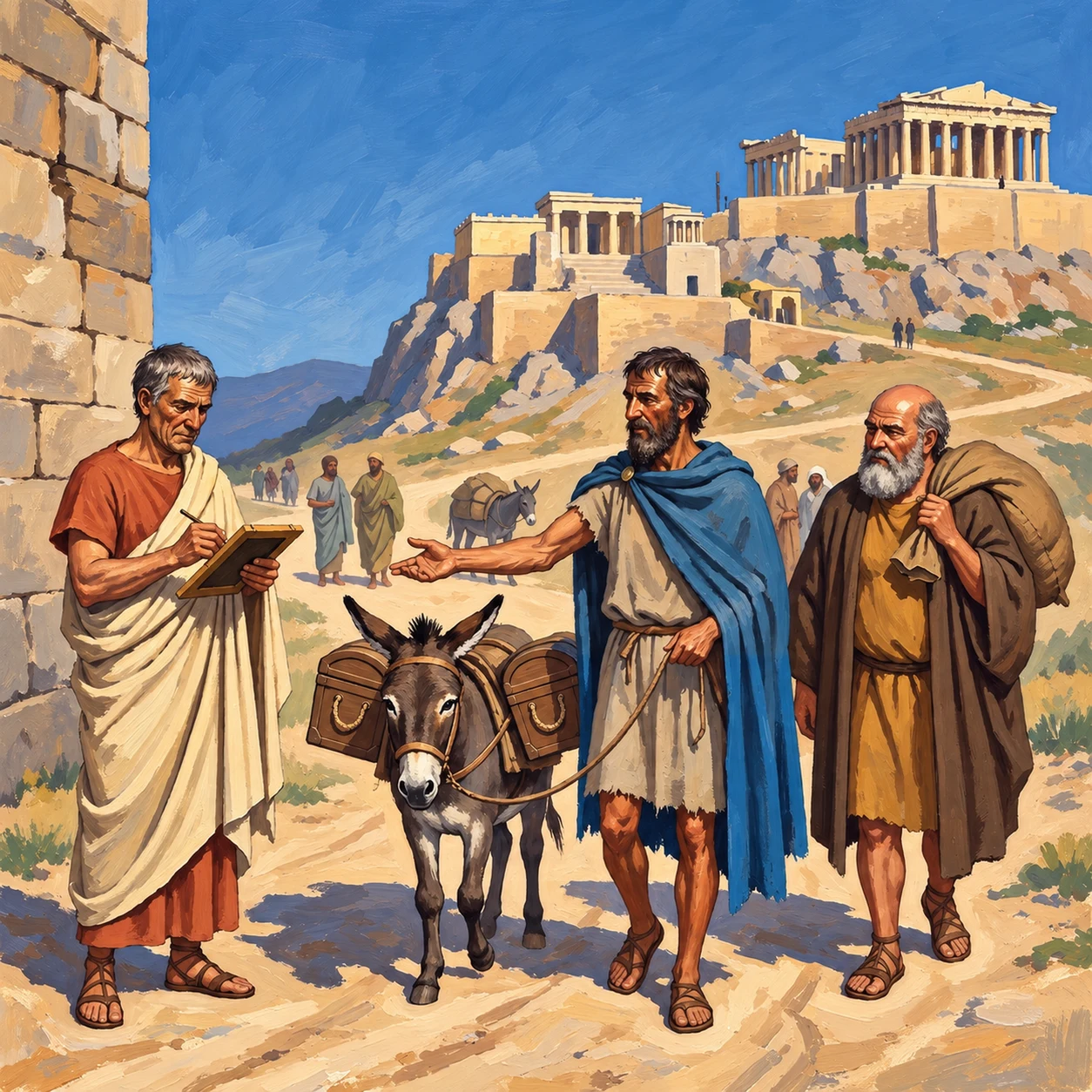
1. Pericles of Athens
Pericles (c. 495–429 BCE) led Athens through the height of her power. He widened the democracy — paying poor citizens to serve as jurors and officials — and redirected the tribute of the Delian League to raise the Parthenon as the monument of the age. When plague took him in 429 BCE, the golden age did not long outlive him, but the idea of Athens did. This game is set in his moment.
“As a city we are the school of Hellas.”Thucydides 2.41 · trans. Richard Crawley
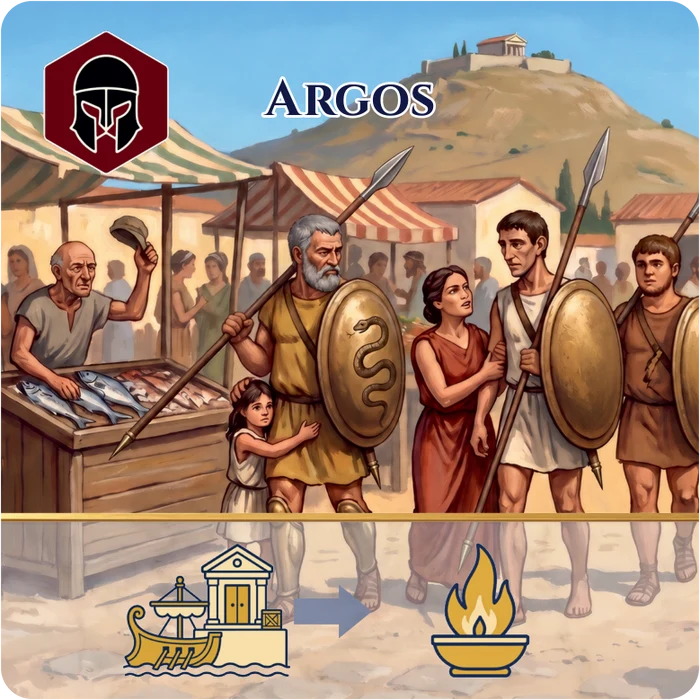
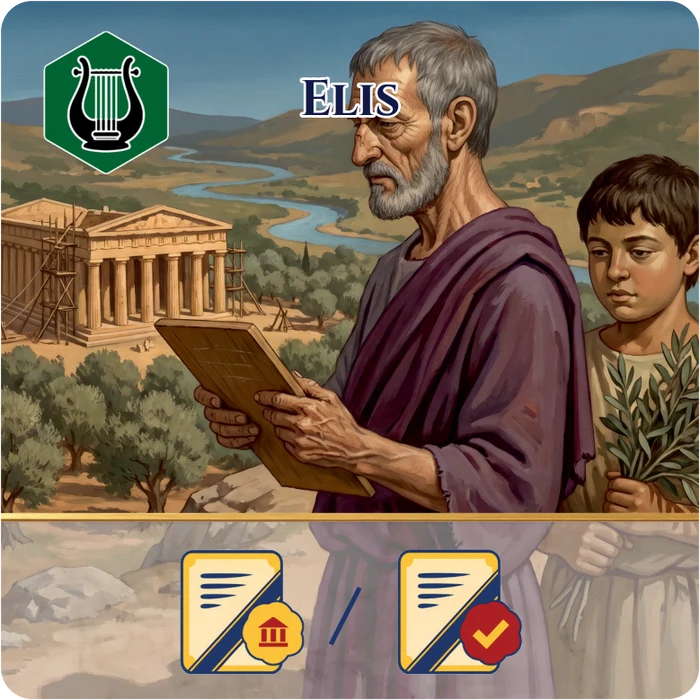
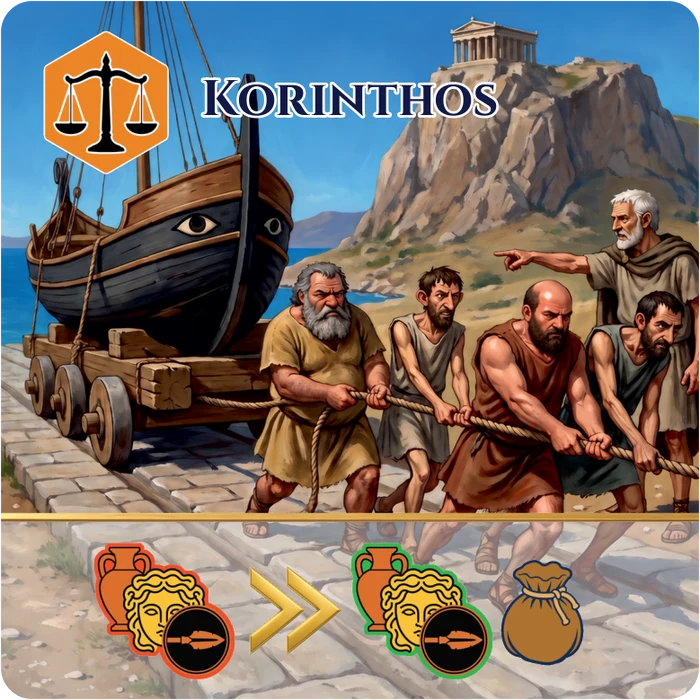
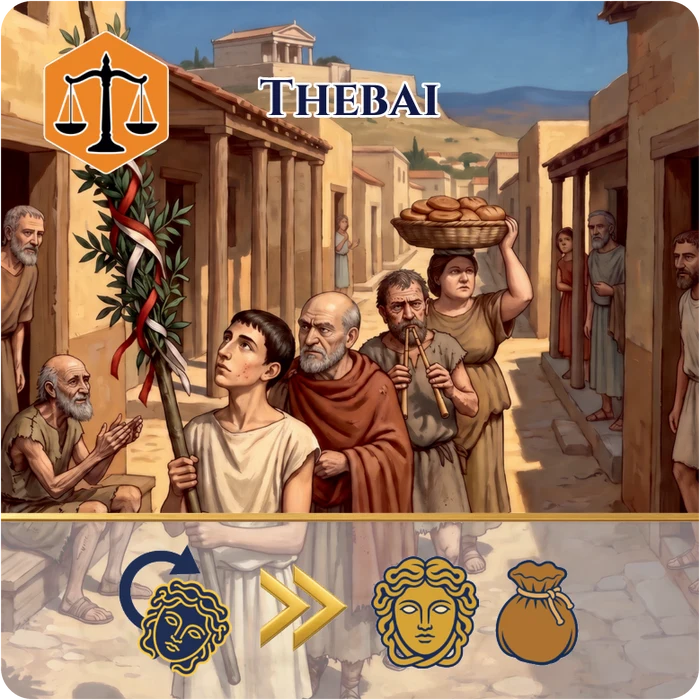
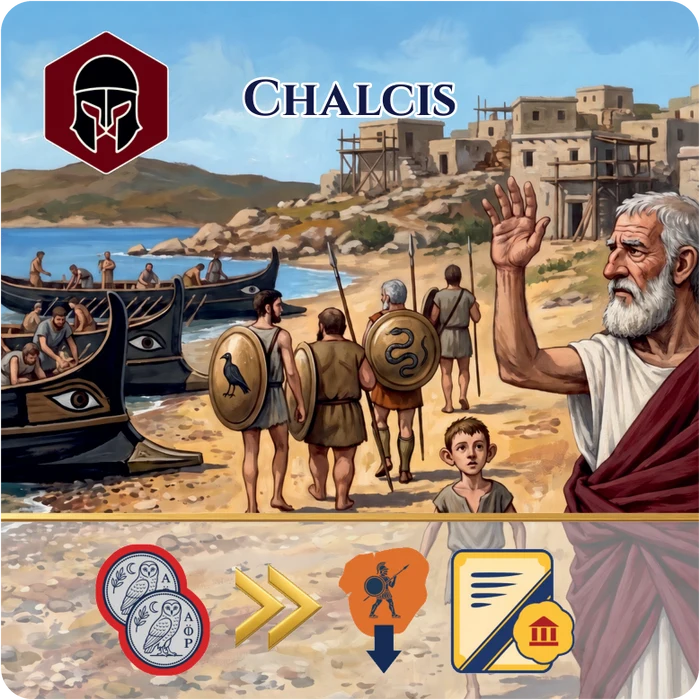
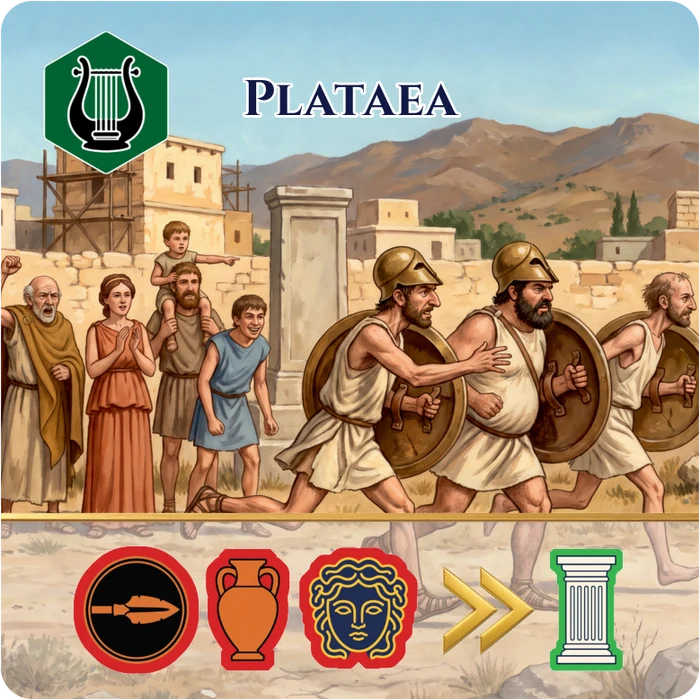
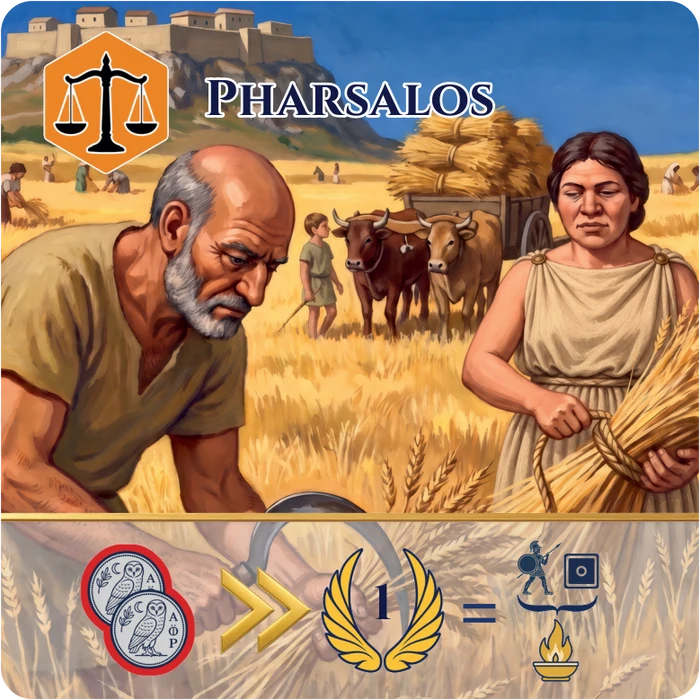
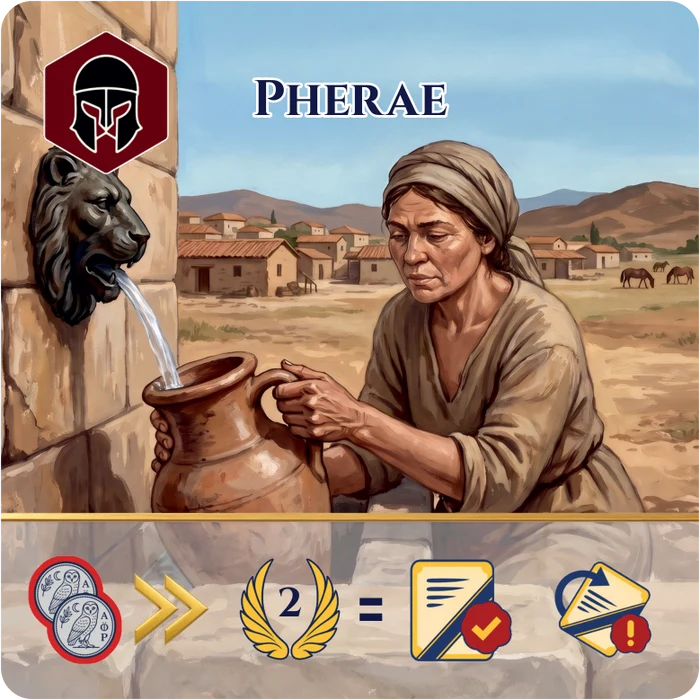
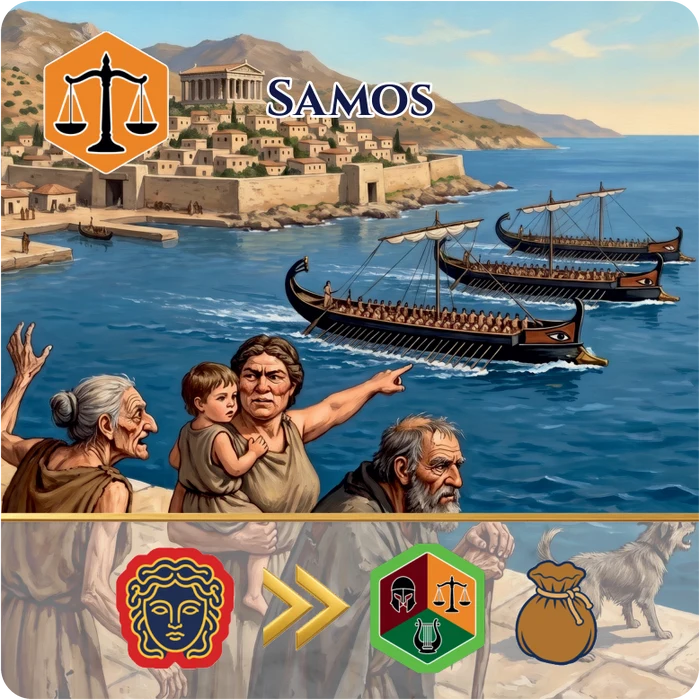
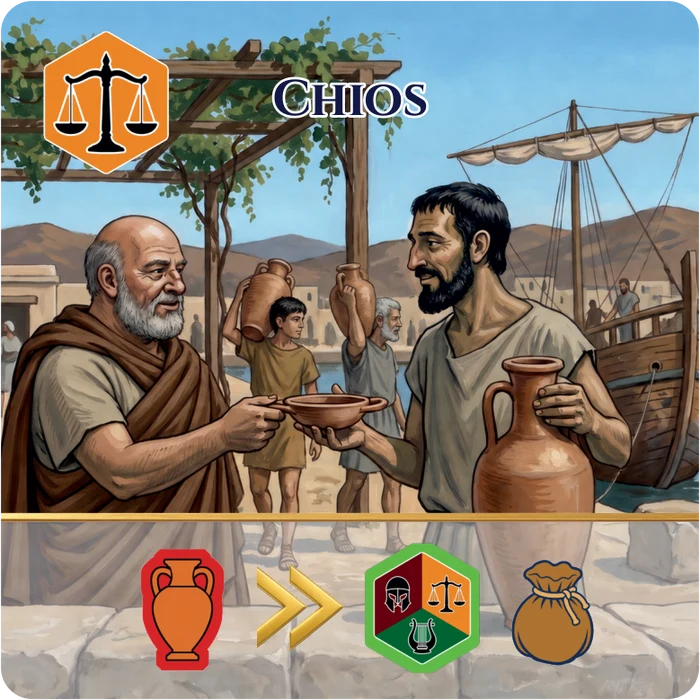
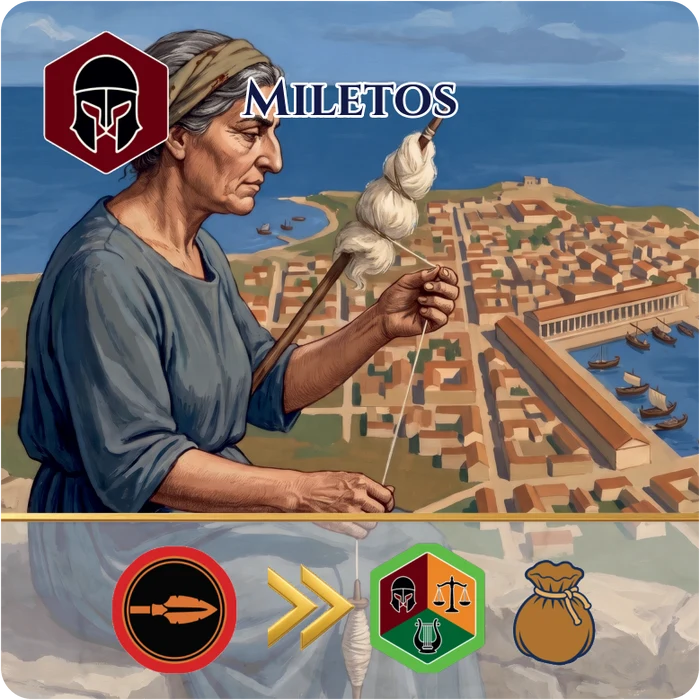
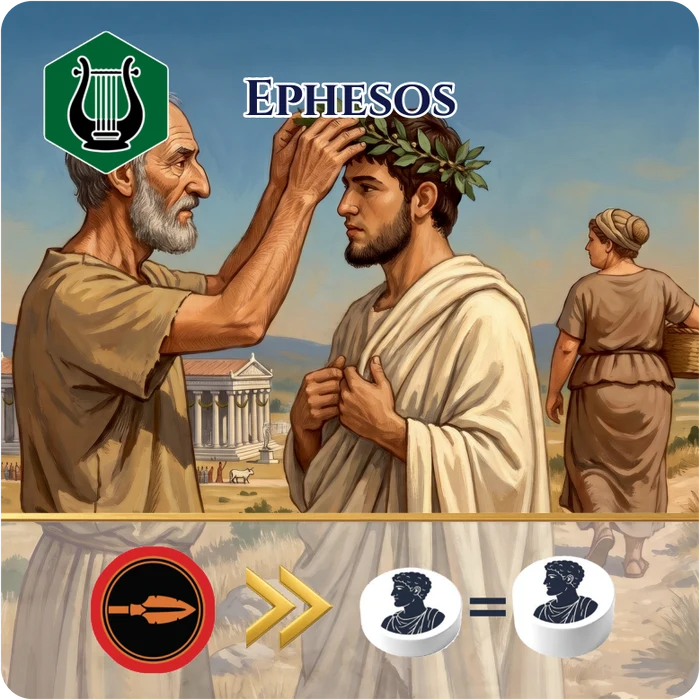
2. The 15 City-States — each joins Athens when it travels off the Diplomacy track
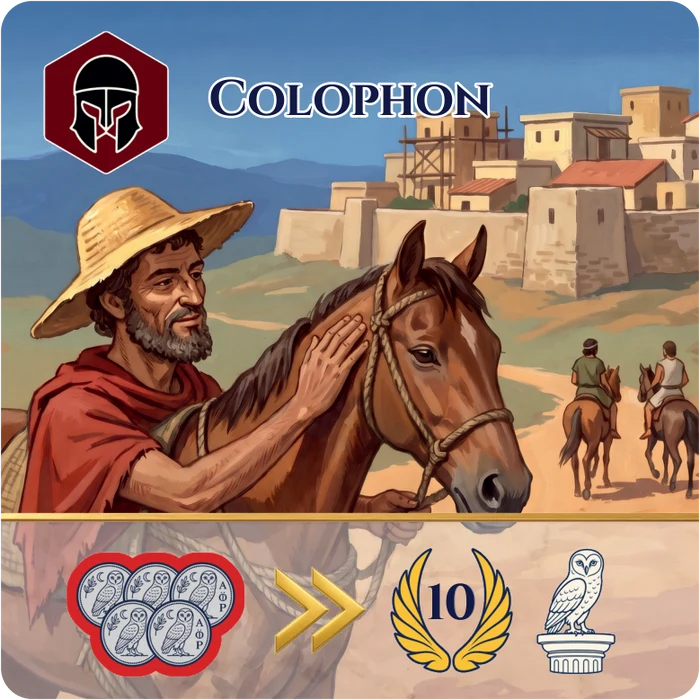
★ Starting tile (6) · others Advanced (9). The top-left hex is the tile’s Glory type (Military / Economy / Culture). On every ability row a red frame means pay to the Reserve, a green frame means gain from it. If you cannot pay, the tile has no effect.
XX. In Testing: the Demagogue and Solo
These rules are still being tested. Play them, then tell us how they went at info@apeiron.games.
1. The Demagogue · 2 players
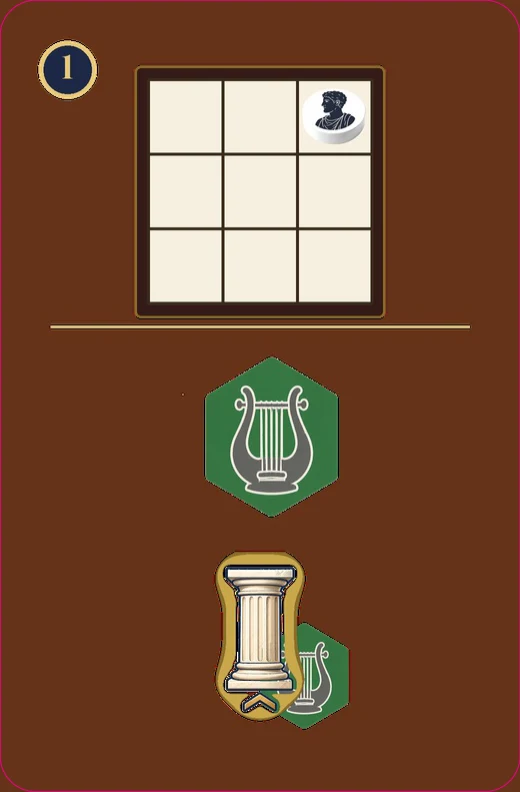
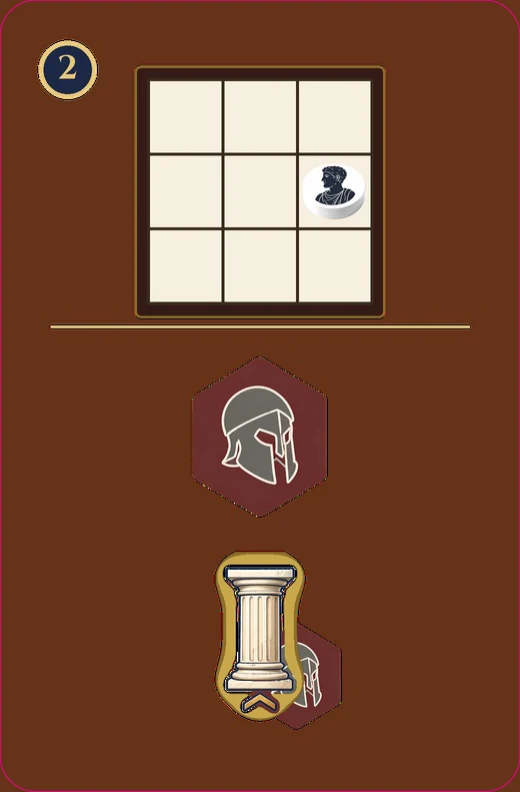
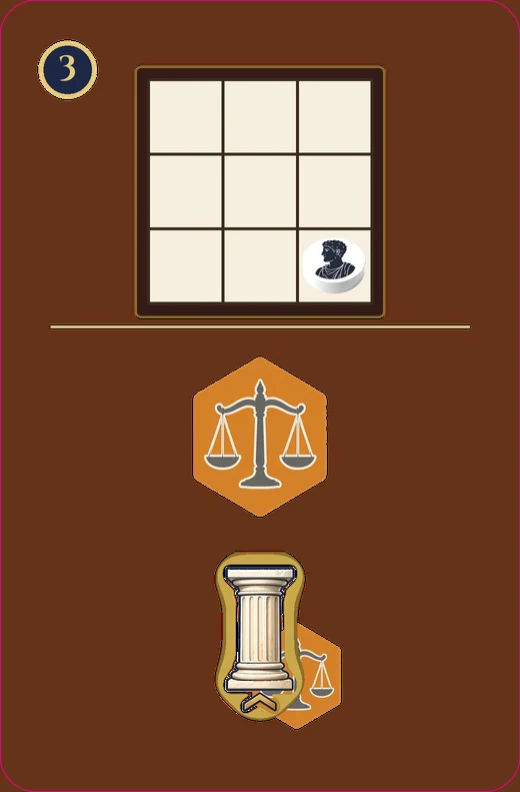
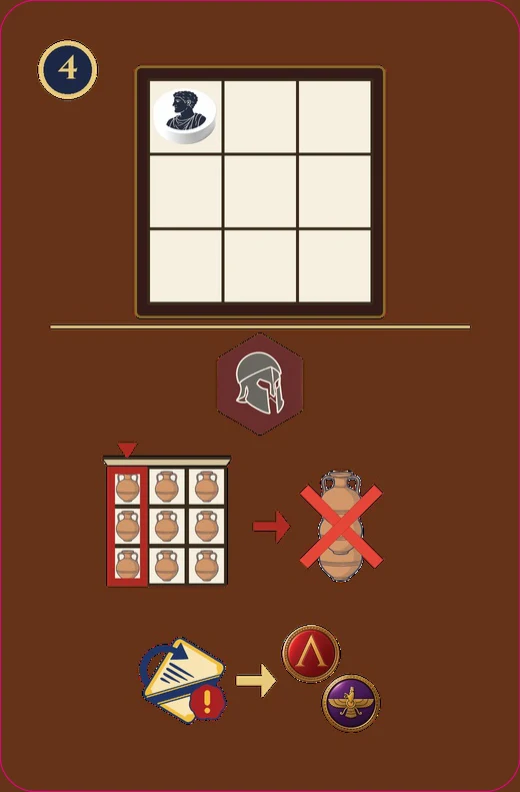
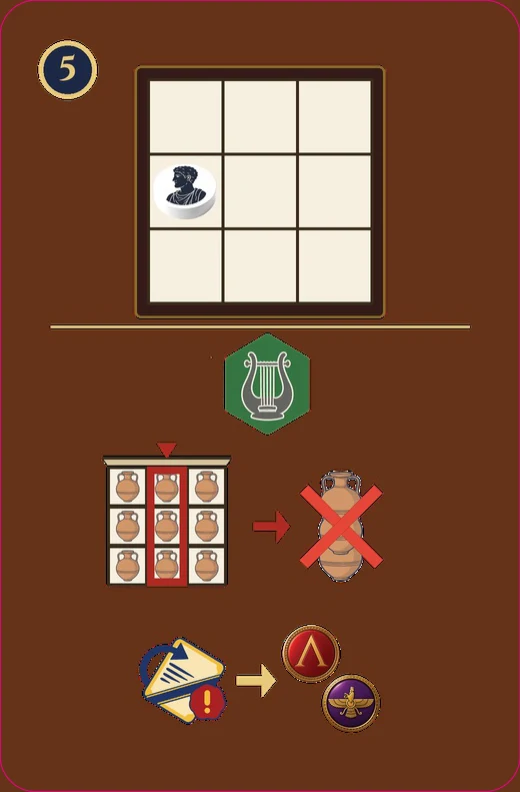
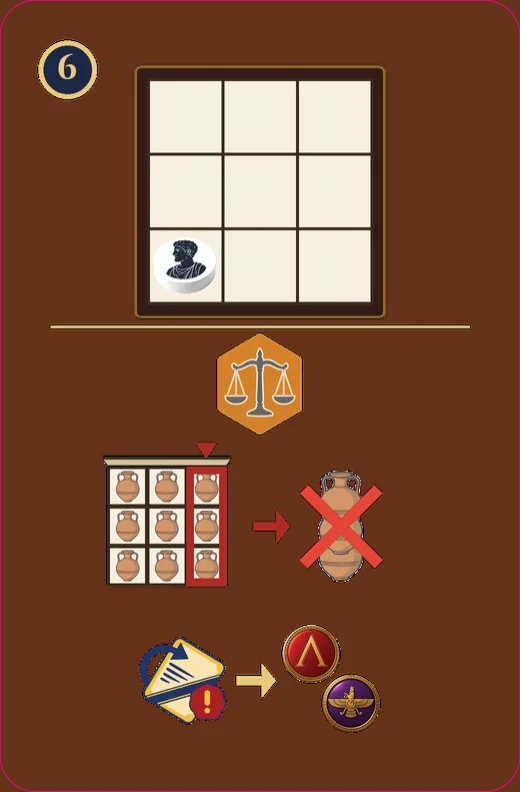
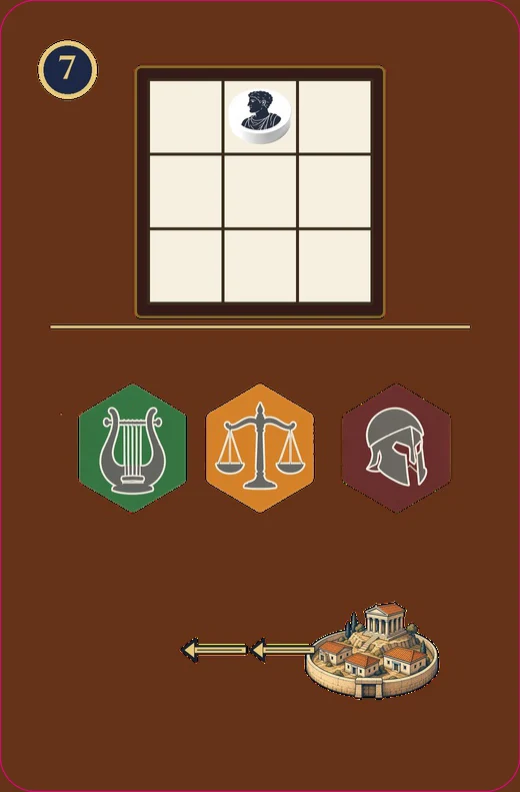
Setup. A third Athenian in an unused colour, seated between you: 4 Citizens (1 Large, 3 Small), 8 Diplomats and 2 Hoplites beside the board; shuffle its 9 cards face down. No Oikos, resources, cards, Missions or Glory.
Citizens. Round 1: 2 Small. Round 2: Large first, then 2 Small. Round 3 onward: Large first, then all 3 Small. It takes its turns in the normal clockwise order.
Its turn. Reveal the top card. Place its next Citizen on the Agora space printed on the card; if it already has a Citizen there, use the next space in reading order where it has none. Then resolve the card’s effects top to bottom. The card replaces all normal actions. The real player to its left makes any choice it must make (such as where an integrating City-state goes). After the ninth card, reshuffle all nine.
Governance. Its Citizens count in every majority (Large = 2). An Office it wins rewards no one; in a tie with it, only the tied real player takes the tie reward. If it holds the First Player diagonal, the token goes to the real player with the most there (tie: the normal tie rule).
Its pieces. Its Diplomats enter and leave Progress rows like yours, but score nothing and earn no Compensation; they return beside the board. With no Diplomat left, skip that placement. Its Hoplites never defend; after a Battle they return beside the board.
2. Solo
The box says 1–5 players. Solo mode is still being designed and is not part of this edition. Its rules will appear on the online rules reader first — scan the QR code on the cover.
- Top right. Culture icon placement; Athens builds a Culture column.
- Middle right. Military icon placement; Athens builds a Military column.
- Bottom right. Economy icon placement; Athens builds an Economy column.
- Top left. Military icon placement; return 3 Amphoras from the left Market column to the Reserve; reveal a Mission.
- Middle left. Culture icon placement; the same from the middle column; reveal a Mission.
- Bottom left. Economy icon placement; the same from the right column; reveal a Mission.
- Top centre. One icon placement on each of the three rows; move the City-state twice.
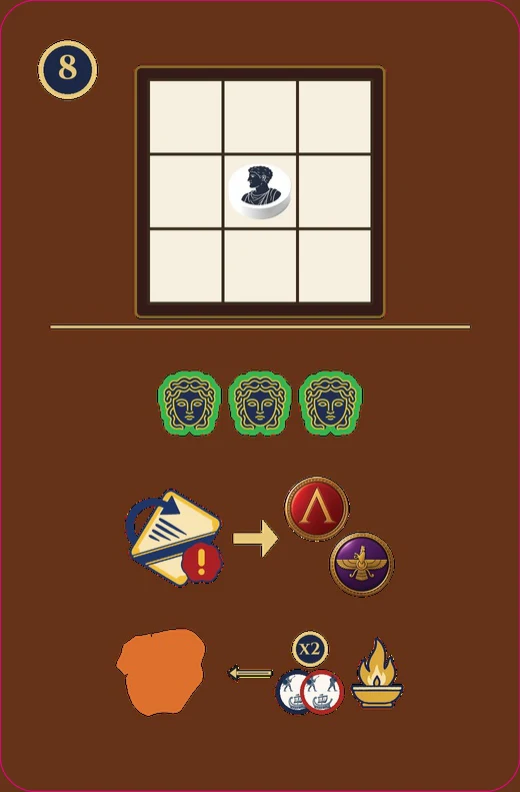
- Centre. Gain 3 Athena cards and discard them; reveal a Mission; each real player ostracizes one Unit.
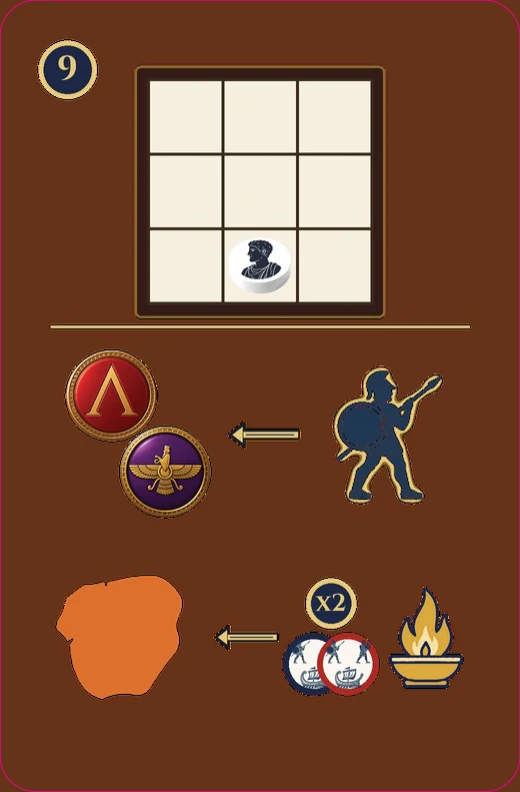
- Bottom centre. One Hoplite to the leftmost free space of each Battle track; each real player ostracizes one Unit.
Ostracism by cards 8 and 9 applies to every real player: the Unit comes from your Unit track, else from Piraeus.
They advance the Rivals as their discs show, then leave the game: never to the Mission discard (p. 14).
No real player is ever corrupt: the Demagogue holds the corrupt side all game, and you use only your Role’s Day side.
XXI. Frequently Asked Questions
These are rules, not variants: the collisions and timing questions most likely to interrupt your first game.
1. Assembly & the Agora
2. Cards, City-states & Ships
3. Your House
4. Progress, battle & building
5. Skills
6. Pieces, supply & timing
XXII. Glossary
Every capitalised game term, in alphabetical order, with the page where it is taught. A capitalised word in this book always carries exactly this meaning.
XXIII. Icon Guide
1. Resources
Silver The game’s currency.Amphora Pays for cards & Units; fills the Market.Trophy A Battle honour; pays to build.Athena card Drawn from the Athena deck. Mission card Sparta’s and Persia’s demands, from the Mission deck.
2. Progress icons — the four hexes
Military The Military Progress row.Economy The Economy Progress row.Culture The Culture Progress row.Universal Any one of these three. As an icon placement, the row of your choice; a Universal Athena card matches every row (pp. 12, 15).3. Player pieces
Citizen Your action piece — Large or Small. Diplomat Your influence piece (Stoa → Progress).Worker A Unit sent to a City-state.Ship A Unit sent to a Waypost.Hoplite A Unit sent to a Battle track.Rivals The Sparta & Persia markers. On a card: Rival advance.
4. Places
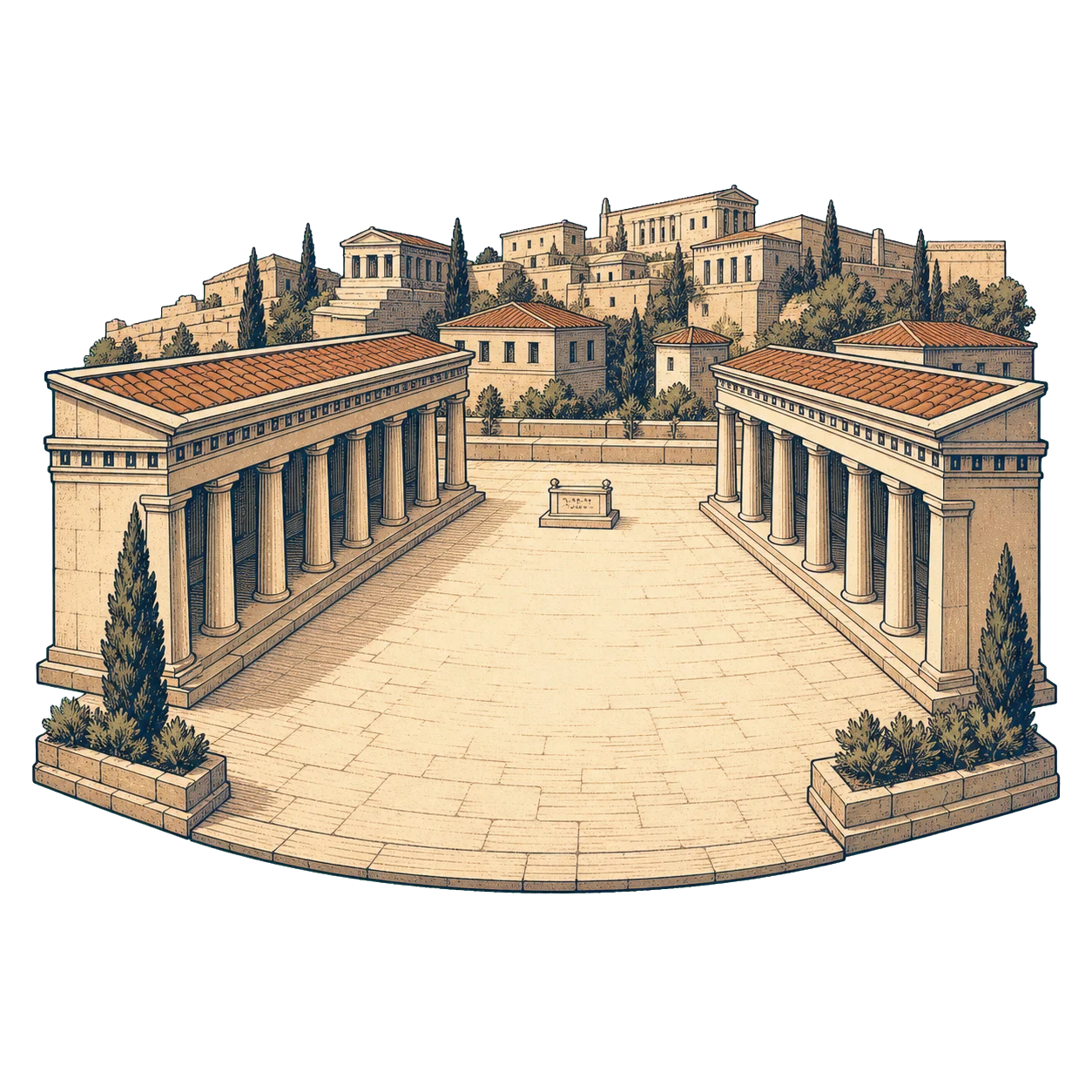 Agora Place a Citizen on an action space.
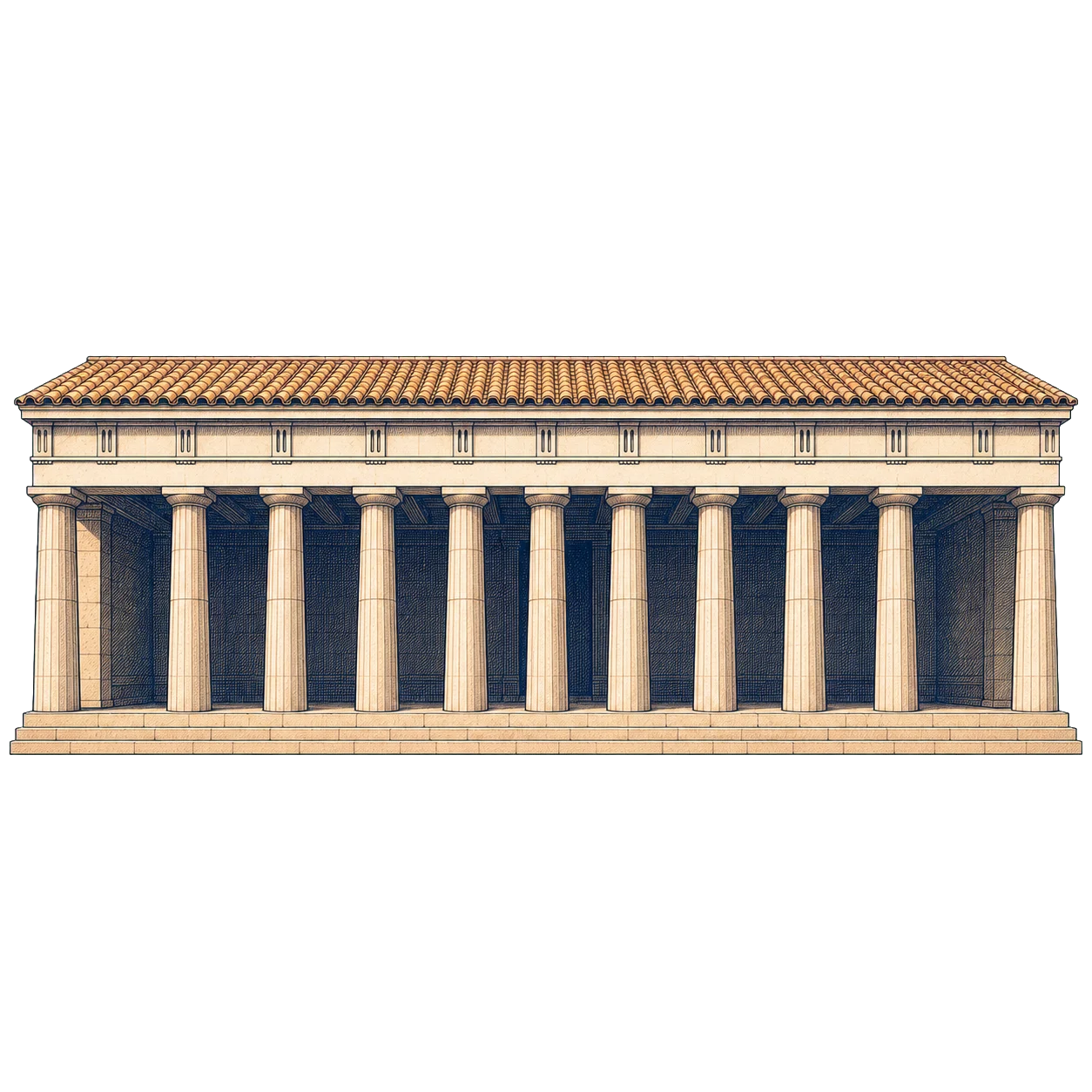 Stoa Where Diplomats gather.
 Market An Emporion space.
 Port Piraeus — Units await deployment.
 City-state A Diplomacy-track tile.
 Ostracized Camp The tile where ostracized pieces wait.
 Ostracize Send the piece shown to the Ostracized Camp.
 Home Return to your Oikos board.
5. Game effects
 Glory Victory points — the winner has the most.
 Gain a card Take an Athena card.
 Score a Mission Reveal a fulfilled Mission for its reward.
 Bring home Recall a Unit or Diplomat.=Upgrade Your Small Citizen here acts as a Large one: both Main Actions this turn. It still counts 1 in Governance.
 Large → Small Mission condition, the mirror of Upgrade: the Large Citizen whose space action reveals it takes one Main Action. It still counts 2 in Governance.Day Your Role’s clean side.Night Your Role’s corrupt side.Corruption The Corruption offer of Silver.
 Athena reveal Reveal an Athena card, then resolve it.
 Battle Combat against the Rivals.
 Mission-flip Flip the top Mission; advance the Rivals.Athens builds Athens builds a column (see p. 12).
 Build a column Build one column and score its row (free as a reward).
 Evaluate Score and pay out the Progress track and its cards.
 Compensation table What a knocked-out or undefended Diplomat earns — its Day / Night reward (see p. 10).
 Move a City-state Move the active City-state one space toward Athens; past the last space it integrates and Athens builds (p. 10).
No matching section. Try another word.